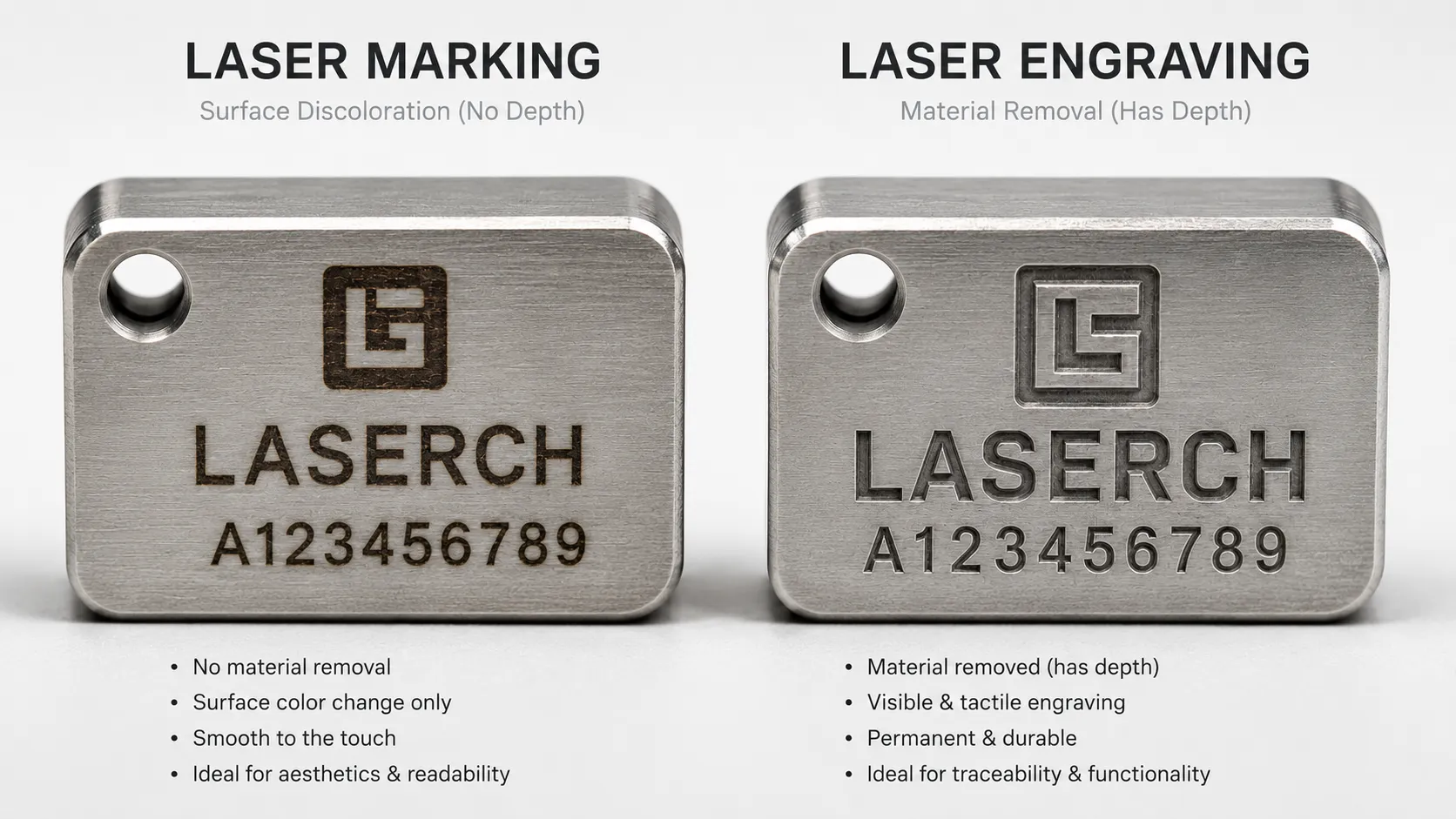
Laser marking and engraving produce distinct physical outcomes on parts. Choosing the correct process reduces scrap, shortens cycle time, and preserves traceability through downstream operations.
Use laser marking for high-speed, low-impact identification. Use laser engraving when depth, tactile features, or plating survivability are required.
The guidance below frames definitions, substrate–wavelength matching, performance trade-offs, and an engineering decision workflow suitable for process specification and production validation.
Introduction
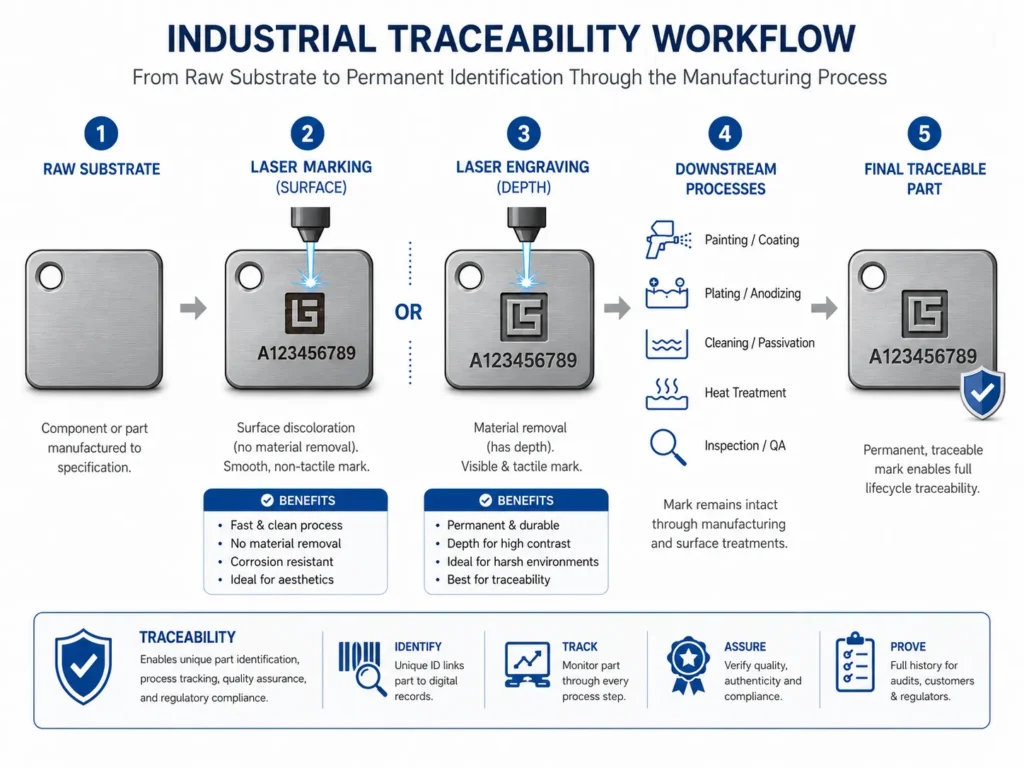
Start specifications by listing substrate(s), coating systems, required mark life, acceptable cosmetic change, throughput targets, and downstream treatments (plating, tumbling, sterilization, heat treat). These inputs determine whether marking or engraving is appropriate.
A working rule: prefer marking when minimal material removal and high throughput are priorities. Prefer engraving when marks must survive aggressive mechanical, chemical, or thermal post‑processing.
What is Laser Marking?
Laser marking modifies the surface to produce contrast or microscale texture without significant bulk removal. Mechanisms include annealing/oxidation, color change via laser‑induced chemistry, polymer foaming, and selective coating removal (ablation). Typical marked depth is on the order of micrometers (commonly < 0.01 mm); tactile depth is generally absent.
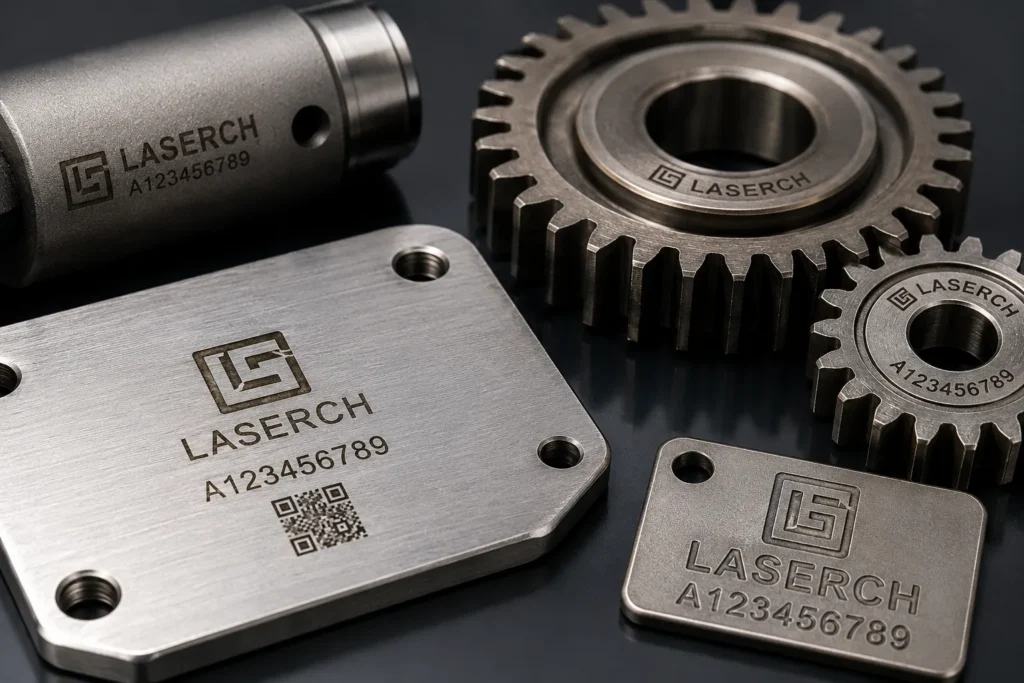
Marking is optimal for serialized traceability, 2D codes, logos, and cosmetic identifiers where geometric tolerances and surface finish must be preserved.
Mechanisms, substrate compatibility, and wavelength guidance
| Mechanism | Suitable substrates | Typical result | Wavelength / source notes |
|---|---|---|---|
| Annealing / Oxidation | Stainless steel, titanium | High-contrast color change, minimal depth (< 10 µm) | Fiber (1064 nm) or pulsed Nd:YAG; short pulses to limit HAZ |
| Foaming / polymer expansion | ABS, PC, PMMA blends | Raised, light marks on dark plastics | Nanosecond / microsecond pulsed fiber or DPSS; UV can reduce thermal load |
| Coating ablation | Painted, anodized, PVD | Exposes underlying material for contrast | Fiber or UV for thin coatings; CO2 for organic paints with tuned fluence |
| Carbonization | Wood, leather, some polymers | Dark permanent marks | CO2 lasers (10.6 µm) excel; monitor HAZ on thin substrates |
Process controls to document: wavelength, pulse duration, pulse energy/fluence, repetition rate, focal offset, and assist gas. Validate parameters on representative production material and record measurable acceptance criteria (contrast ratio, code readability, surface roughness).
Marking performance characteristics
- Throughput: High for short content and 2D codes when using galvanometer scanners.
- Dimensional impact: Negligible; dimensionally safe for tight‑tolerance components.
- Durability: Sufficient for cosmetic wear and many cleaning cycles; verify for plating or aggressive abrasion.
- Integration: Straightforward with vision systems for fiducial alignment and conveyors for high volume.
What is Laser Engraving?
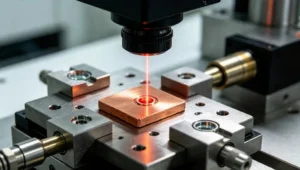
Laser engraving removes substrate material to create recessed, tactile features. Depth, surface geometry, and edge quality are controllable by power, passes, and focal strategy. Engraved marks withstand heavy abrasion, plating, tumbling, and aggressive cleaning cycles.
Engraving is appropriate for nameplates, tooling IDs, dies, grips, and any component requiring functional or tactile marks.
Engraving methods, depth control, and practical considerations
| Method | Typical substrates | Typical depth range | Practical considerations |
|---|---|---|---|
| Vector engraving (continuous/long pulse) | Metals, engineering plastics | 0.01 mm to 0.5 mm per pass strategy | Fiber lasers preferred for metals; maintain focus and control overlap to prevent taper |
| Raster engraving (scanned fill) | Plastics, anodized metals, composites | Surface area removal; depth accumulates over passes | Use air blow or extraction to remove redeposited material; inspect for recast |
| Deep/multi-pass engraving | Hardened steels, ceramics, thick aluminum | >0.1 mm achievable with staged passes | Monitor thermal input, taper, and microcracking; consider coolant or dwell strategies |
Critical parameters: average power, pulse energy, repetition rate, scan speed, hatch spacing, number of passes, and focal depth. Post-process tasks may include deburring, passivation, cleaning, or coating repair after engraving.
Engraving performance characteristics
- Durability: High; marks retain legibility after plating, tumbling, or grinding.
- Surface integrity: Altered; may require finishing depending on tolerance and aesthetic requirements.
- Throughput: Lower than marking for equivalent visual complexity; deep marks increase cycle time.
- Fixturing: Critical—maintain accurate focal distance on curved or thin parts to avoid quality variation.
Side-by-Side Comparison
A concise comparison aids specification, procurement, and quality planning.
| Criterion | Laser Marking | Laser Engraving |
|---|---|---|
| Primary effect | Surface modification (color/texture) | Material removal (recessed features) |
| Typical depth | < 0.01 mm (micrometers) | 0.01 mm to multiple mm (depending on passes) |
| Common wavelengths | Fiber (1064 nm), UV (355 nm), CO2 (10.6 µm for organics) | Fiber for metals; CO2/UV where suitable for organics and fine features |
| Throughput | Very high with galvo scanners | Moderate to low; multi-pass increases cycle time |
| Surface integrity | Preserved | Altered; may need finishing |
| Durability after plating/tumbling | Variable; must be validated | High; recommended when plating or tumbling expected |
| Typical applications | Barcodes, cosmetic logos, traceability | Nameplates, tooling IDs, functional features |
Employ standardized test protocols (e.g., ISO/IEC barcode print quality metrics, Taber abrasion cycles, salt spray, or chemical exposure tests) to validate process selection under expected end‑use conditions.
How to Choose the Right Machine for Your Application
Follow a structured engineering checklist and validation plan before procurement and process release.
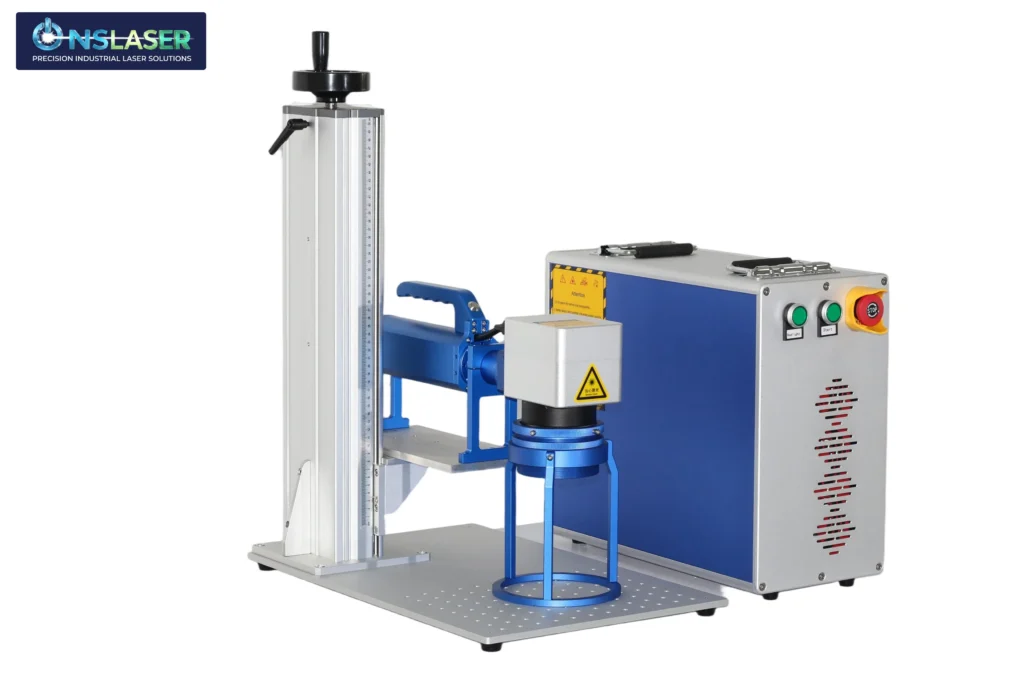
- Material and coating analysis: match substrate to laser wavelength and absorption characteristics (fiber for metals and dark plastics; CO2 for organic materials; UV for fine-feature plastics and low thermal impact).
- Durability requirements: specify required abrasion cycles, plating adhesion, and chemical/sterilization resistance. If marks must survive plating or tumbling, select engraving or validated marking that proves survivability.
- Throughput targets: size equipment for parts per hour. For >1,000 marks/hour of short codes, prefer galvo marking systems. For low-volume, deep marks, plan for multi-pass engraving cycles.
- Quality metrics: define contrast ratio targets, barcode decode scores (ISO/IEC 15415/15416), maximum allowable depth/taper, and surface finish after marking/engraving.
- Fixturing and focal control: require tolerance on focal distance and repeatability; specify vision alignment for variable geometry parts.
- Process qualification: require parameter sheets, approved sample coupons, accelerated aging tests, and a written control plan (parameter lock, operator instructions, and traceable logs).
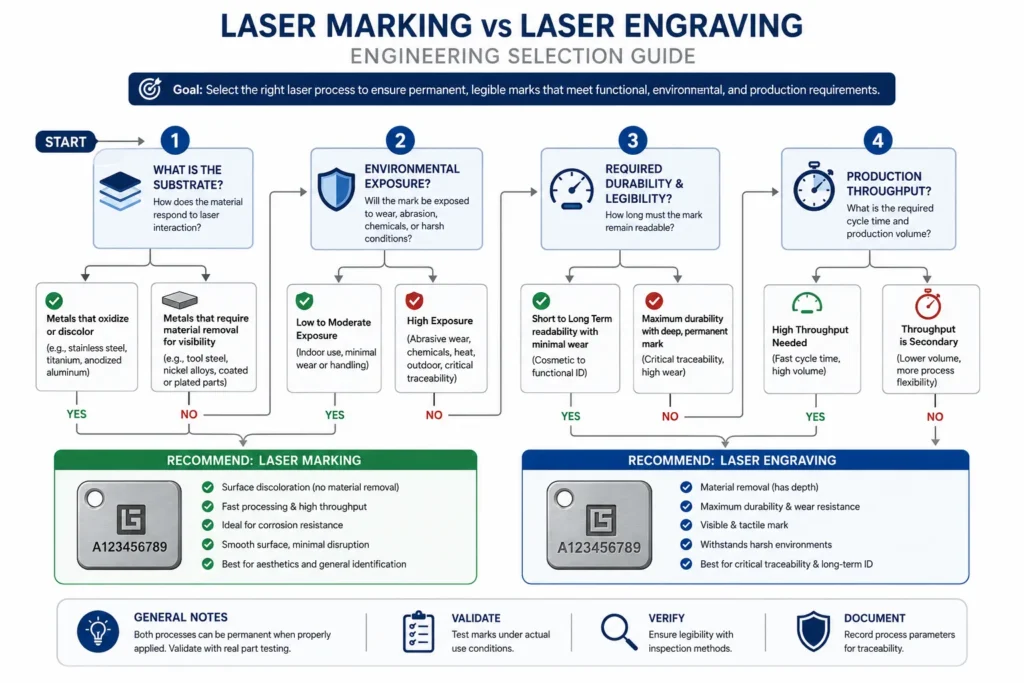
Decision matrix (summary)
| Condition | Recommended process |
|---|---|
| High-volume serialized coding with minimal substrate impact | Laser marking (fiber with galvo and vision) |
| Marks must survive plating, tumbling, or heavy abrasion | Laser engraving (multi-pass with fixturing) |
| Thin or heat-sensitive parts where geometry must remain intact | Laser marking with low fluence or UV marking |
| Requirement for tactile or mechanical features | Laser engraving with depth control and post-process finishing |
Include a factory acceptance test (FAT) plan that covers parameter transfer, sample marking, and accelerated aging prior to production release.
Conclusion
Laser marking and engraving serve different engineering goals. Laser marking delivers high throughput with minimal dimensional impact. Laser engraving produces durable, tactile features that withstand harsh post‑process conditions. Selecting the correct technology reduces rework, secures traceability, and improves overall process effectiveness.
Contact the team to request a side‑by‑side specification sheet, arrange an on‑site or virtual demo, or download the ROI calculator and integration checklist. Provide material samples and throughput targets to obtain tailored parameter templates and a validation plan.