Continuous Wave (CW) Fiber Laser Cleaning Machine | 1000W-3000W
High-Efficiency Thermal Ablation Engineering for Rapid Heavy Rust, Mill Scale, and Thick Coating Removal.
How Continuous Wave (CW) Fiber Laser Cleaning Works
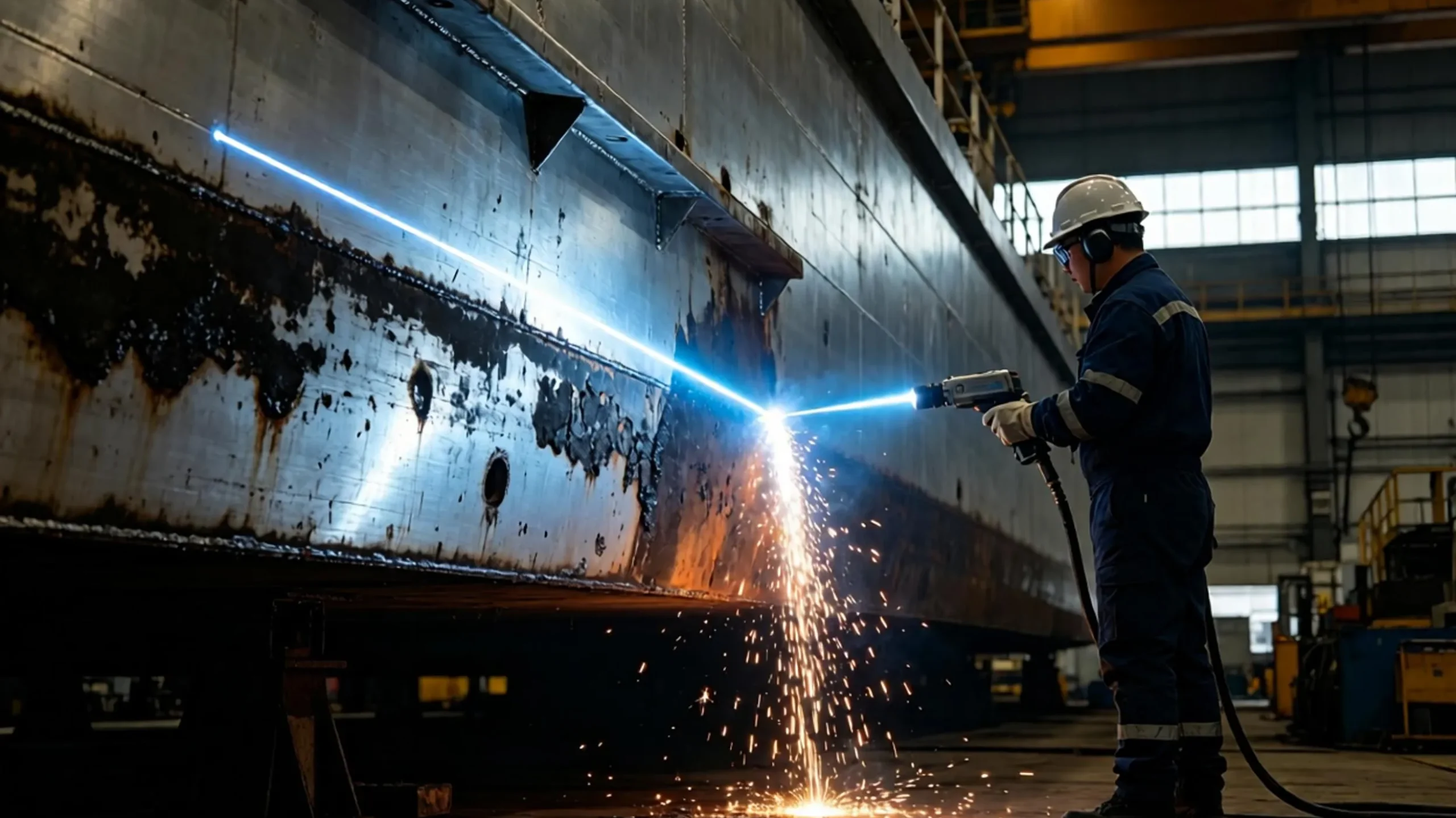
Unlike pulsed laser systems that rely on high-frequency micro-explosions, Continuous Wave (CW) Fiber Lasers deliver an uninterrupted, high-energy thermal laser beam directly onto the substrate. The contaminant layers are removed through a rapid, controlled 3-Step Thermal Ablation Process:
01
Energy Absorption
The surface layer (heavy rust, oxide scale, thick paint, or oil grime) rapidly absorbs the continuous laser beam’s high thermal energy, converting light energy into intense heat in milliseconds.
02
Thermal Expansion & Micro-Cracking
Because the contaminant and the base metal have vastly different thermal expansion rates, the sudden continuous thermal shock causes the contaminant layer to expand rapidly, crack, and lose adhesion to the substrate.
03
Vaporization & Clean Extraction
The top contaminants instantaneously vaporize into micro-particles and smoke, which are immediately swept away by an integrated air-purge system and fume extractor, leaving a smooth, clean surface.
Laser rust removal video
Traditional Cleaning vs. Pulsed Laser vs. CW Laser
Why Continuous Wave (CW) Laser Cleaning is the cost-effective, high-throughput solution for heavy industry.
| Feature / Metric | CW Laser Cleaning (Continuous Wave) | Pulsed Laser Cleaning (Precision Pulsed) | Traditional Methods (Sandblasting / Chemical) |
|---|---|---|---|
| Cleaning Speed | High throughput – well suited to large-area rust, paint and heavy contamination removal | Controlled precision cleaning – optimized for localized and selective contaminant removal | Application-dependent – productivity varies with process, setup and cleanup requirements |
| Applicable Substrates | Thick steel, iron, aluminum and robust industrial components; additional care is required on thin or heat-sensitive materials | Metals, thin sheet, molds and other surfaces requiring controlled heat input and precise cleaning | Metals, concrete, stone and other compatible surfaces; abrasive or chemical effects depend on the process used |
| Best-Fit Applications | Shipyards, steel structures, tanks, heavy rust removal, paint stripping and large industrial components | Precision molds, sensitive components, weld cleaning and applications requiring selective surface treatment | General surface preparation, coating removal and applications where conventional blasting or chemical treatment is established |
| Initial Investment | Moderate to High – varies by laser power, configuration and automation requirements | Moderate to High – varies by pulse characteristics, power and system configuration | Generally lower equipment entry cost, but additional infrastructure and consumables may be required |
| Operating Requirements | Low consumable use; electricity, protective optics and routine system maintenance | Low consumable use; electricity, protective optics and routine system maintenance | May require abrasive media, chemicals, compressed air, cleanup and waste handling depending on the process |
| Process Control | Best suited to fast, large-area cleaning where higher heat input can be tolerated | High control over energy delivery for precision and heat-sensitive cleaning applications | Process control varies significantly between blasting, chemical cleaning and other conventional methods |
| Safety & Environmental Considerations | Class 4 laser system; requires appropriate enclosure or controlled area, laser PPE and fume extraction | Class 4 laser system; requires appropriate enclosure or controlled area, laser PPE and fume extraction | Requirements depend on the method and may include dust control, respiratory protection, chemical handling and waste management |
CW Laser Cleaner Solves Industrial Bottlenecks
Processing Speed
Continuous high-power laser output supports fast, large-area cleaning of heavy rust, paint, and surface contamination. Well suited to high-throughput applications on ships, steel structures, tanks, and large industrial components.
Operating Cost
Low consumable requirements eliminate the need for abrasive media or chemical cleaning agents in typical applications. Routine operating costs mainly include electricity, protective optics, and standard system maintenance.
Equipment ROI
High-power CW laser cleaning combines fast processing with low consumable requirements, helping reduce cleaning downtime and improve efficiency in repetitive, large-scale industrial applications.
Eco & Safety Compliance
Laser cleaning avoids abrasive media and chemical cleaning agents in many applications, reducing secondary waste. Appropriate fume extraction, laser safety controls, and PPE are still required for safe industrial operation.
Handheld CW Fiber Laser Rust Removal Machine Models
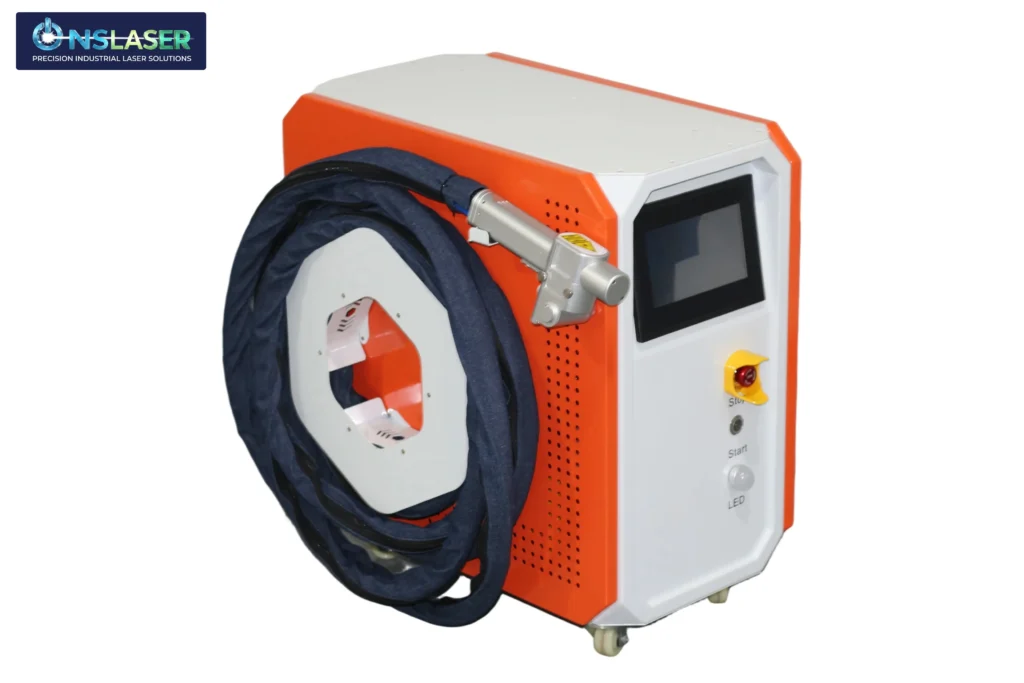
Portable Air-Cooled Fiber Laser Cleaner
Ultra-Portable 50kg Body & Zero Water Chiller — Plug-and-Play Solution for Field Repairs & On-Site Cleaning.
| Specification | Technical Detail |
|---|---|
| Laser Source & Power | MAX CW Fiber Laser 800W/1200W/1500W |
| Cooling System | Maintenance-Free Air Cooling |
| Power Input & Consumption | AC110V/220V Single-Phase (≤ 4.5 kW) |
| Net Weight & Mobility | 50 kg Ultra-Lightweight / On-Site Portable |
| Cleaning Scan Width | 1 – 300 mm Line Scan |
BEST FOR APPLICATIONS
Mobile Outdoor Maintenance | Field Weld & Rust Cleaning | Automotive Sheet Metal | Light Machinery Maintenance
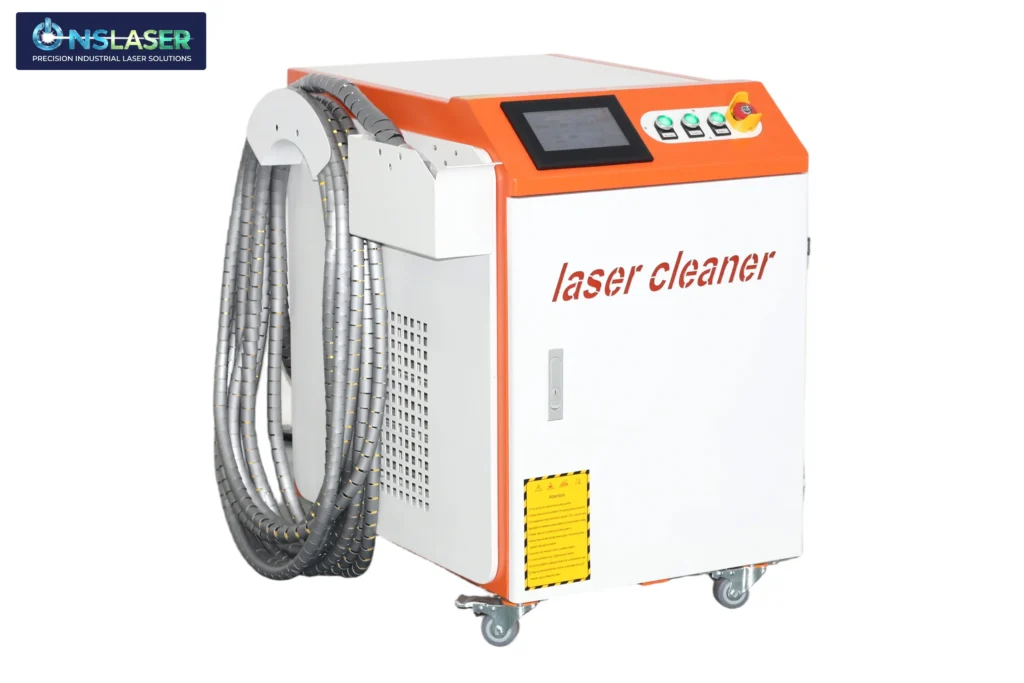
Water-Cooled Trolley CW Laser Cleaner
Heavy-Duty Workshop Workhorse — Designed for Continuous High-Throughput Rust, Paint & Scale Stripping.
| Specification | Technical Detail |
|---|---|
| Laser Source & Power | MAX CW Fiber Laser 1500W/2000W/3000W |
| Cooling System | Integrated Industrial Water Chiller |
| Power Input & Consumption | AC380V Three-Phase (≤ 9 kW) |
| Package Weight & Mobility | 150 kg Mobile Trolley with Universal Castors |
| Cleaning Scan Width | 1 – 300 mm Line Scan |
BEST FOR APPLICATIONS
Steel Structure Fabrication | Thick Rust & Paint Stripping | Shipyard Pre-Weld Cleaning | Industrial Tanks
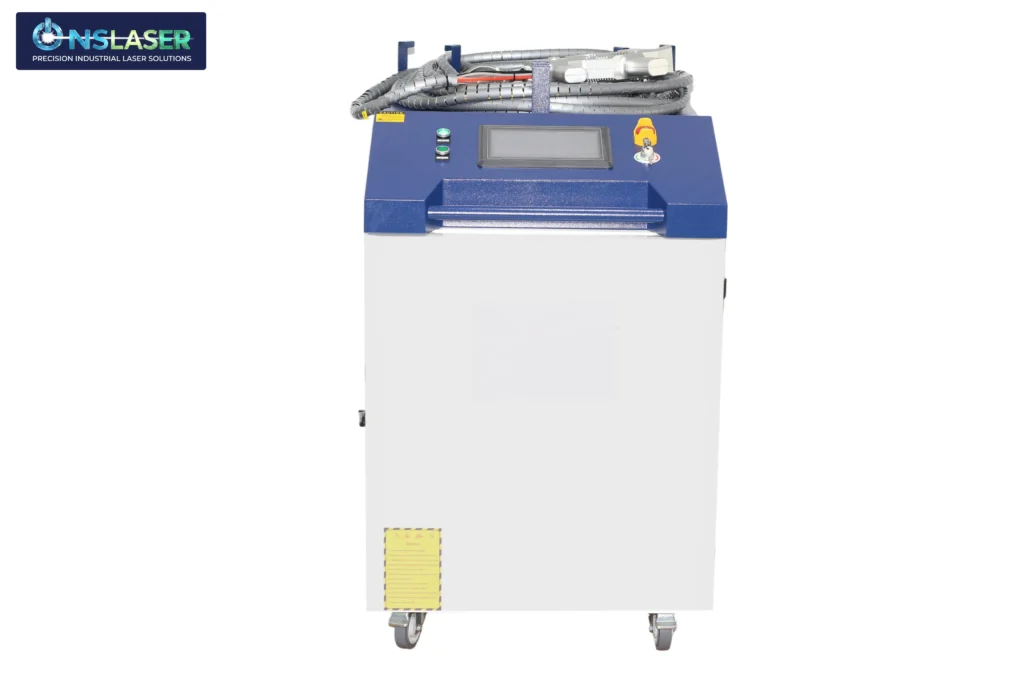
6000W Heavy Enclosed CW Laser Cleaner
Maximum Processing Power & High-Capacity Cooling — Built for Heavy Industrial Marine, Bridge & Tank Restoration.
| Specification | Technical Detail |
|---|---|
| Laser Source & Power | MAX CW Fiber Laser / 6000W |
| Cooling System | High-Capacity External Water Chiller |
| Power Input & Consumption | AC380V Three-Phase (≤ 25 kW) |
| Enclosure & Weight | Dust-Proof Front Door Cabinet (300 kg) |
| Cleaning Scan Width | 1 – 300 mm Line Scan |
BEST FOR APPLICATIONS
Marine Epoxy Paint Removal | Heavy Mill Scale & Deep Rust | Large Oil Storage Tanks | Infrastructure Bridges
Target Materials & Application Engineering
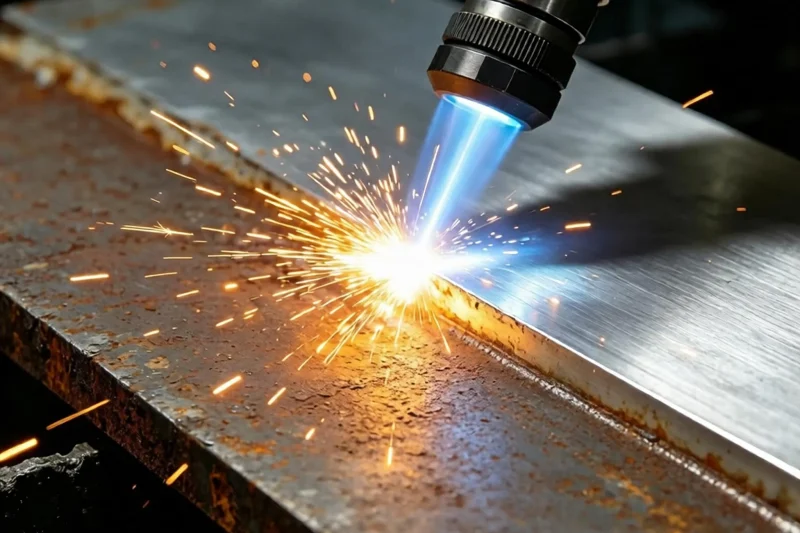
Rust Removal & Surface Preparation
- Ideal for rapid removal of heavy red rust, oxidized mill scale, and thick protective coatings from robust structural metal surfaces, with controlled processing parameters to minimize substrate impact.
- Primary Industries: Shipyard Hulls & Dry Docks, Offshore Steel Structures, Bridges & Heavy Construction, Machinery Manufacturing, Structural Steel Fabrication.
- Recommended Setup: 1500W–3000W Water-Cooled Trolley (High-throughput cleaning for large surface areas)
Weld Bead Pre & Post Cleaning
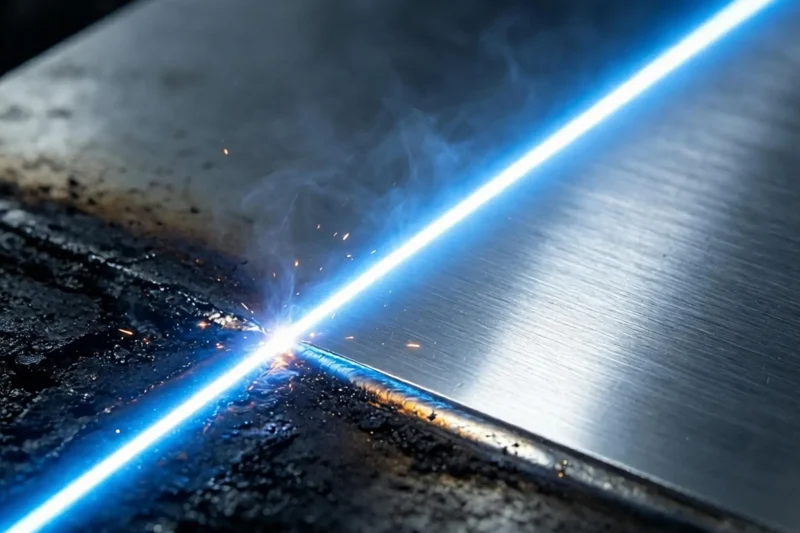
- Rapidly removes heat tint, weld oxides, oil, and surface contamination around weld joints, helping improve surface condition before welding and clean post-weld discoloration and residues.
- Primary Industries: Pre/Post-Weld Preparation, Pressure Vessels, Chemical Tanks, Heavy Sheet Metal Fabrication, Pipeline Manufacturing.
- Recommended Setup: 1500W Air-Cooled Portable / 1500W–3000W Water-Cooled Trolley (Flexible options for on-site cleaning or continuous production lines)
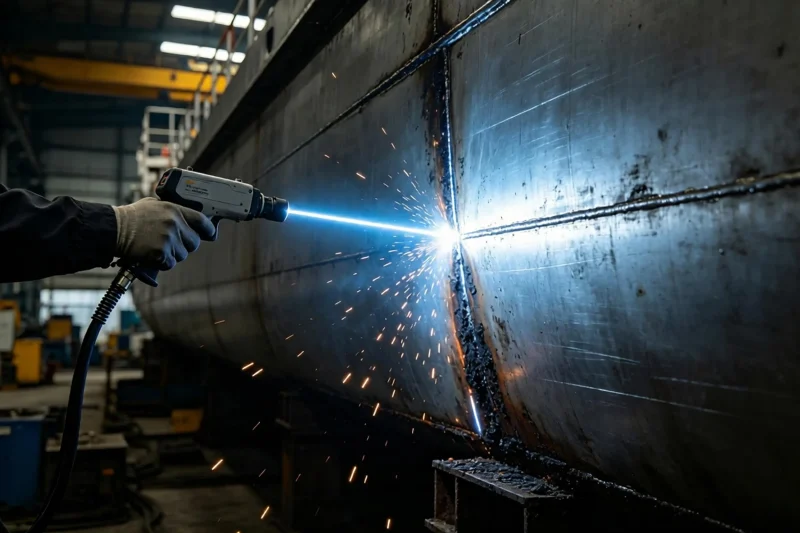
Paint & Heavy Coating Stripping
- High-throughput removal of paint, protective coatings, heavy oxide layers, and stubborn surface contamination from robust metal components and large structural surfaces.
- Primary Industries: Shipbuilding, Steel Structures, Storage Tanks, Heavy Machinery, Automotive Manufacturing, Industrial Maintenance.
- Recommended Setup: 1500W Air-Cooled / 2000W–3000W Water-Cooled System (Selected according to coating thickness, workpiece size, and required cleaning throughput)
Heavy Molds & Industrial Tooling
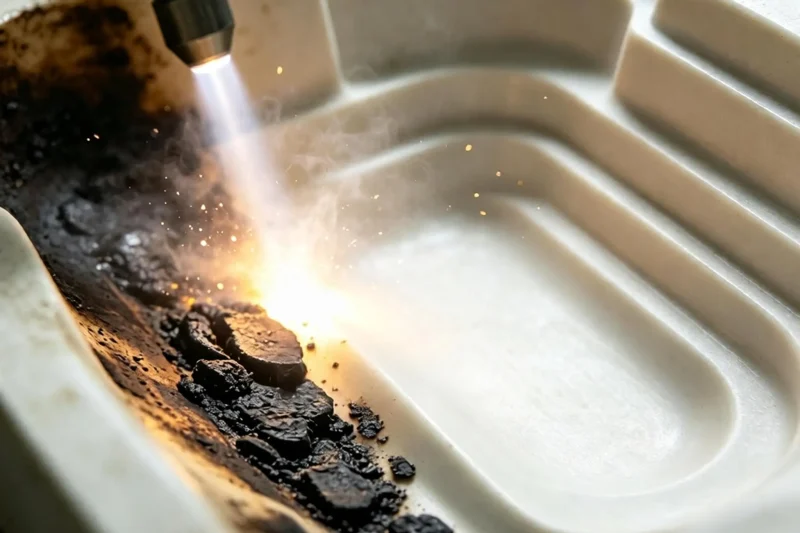
- High-power CW laser cleaning removes stubborn burnt rubber deposits, vulcanized residues, release agents, oil, and carbonized contamination from robust industrial molds and tooling.
- Primary Industries: Rubber & Tire Molding, Heavy Metal Casting, Foundry Tooling, High-Temperature Industrial Equipment Care.
- Recommended Setup: 1500W Air-Cooled / 3000W Water-Cooled Trolley (High-power cleaning for heavy deposits on robust industrial tooling)
ONSLASER Core Advantage
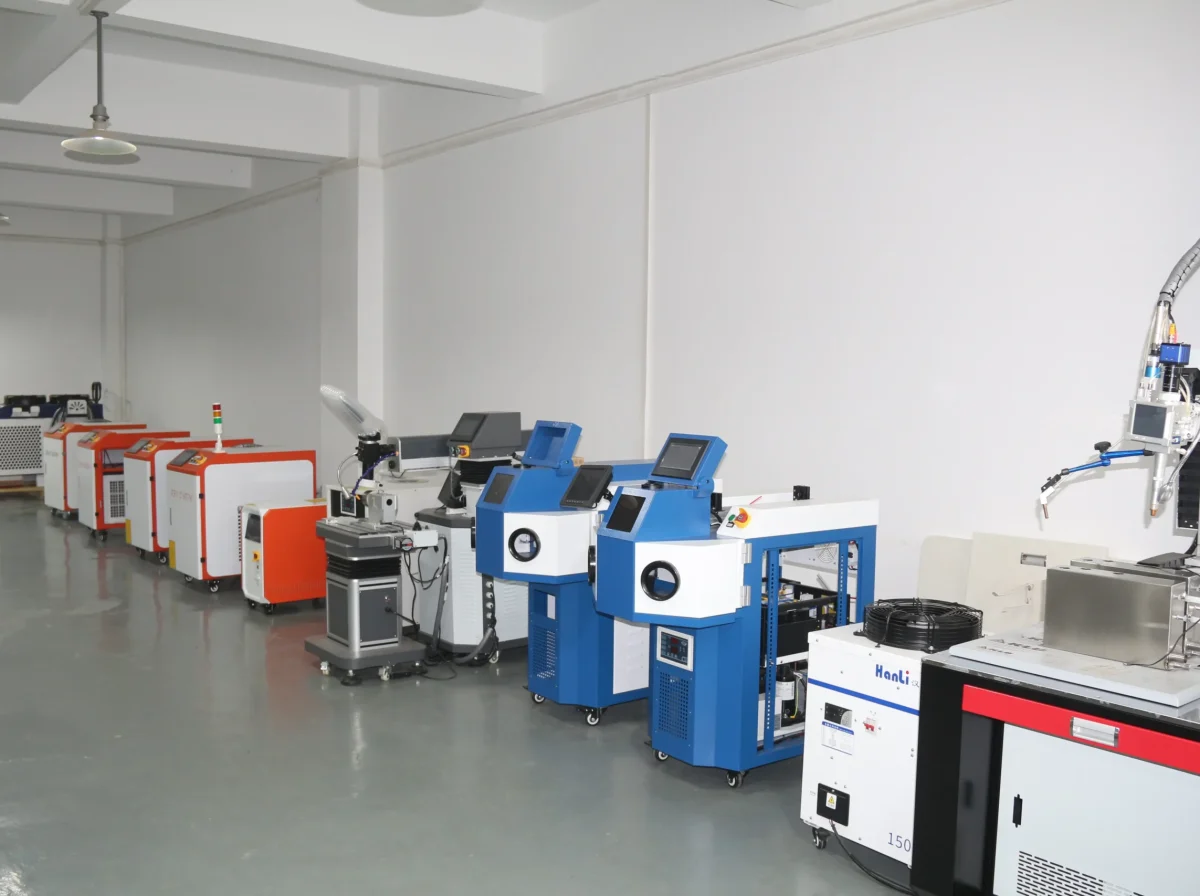
Direct Factory Pricing & Customization
As an original equipment manufacturer (OEM/ODM), we deliver industrial-grade laser cleaning machines directly from our production line. Our OEM services include customized chassis and branding, as well as flexible hardware/software configuration options tailored to your workflow. You get superior quality, zero middleman markups, and highly competitive prices.
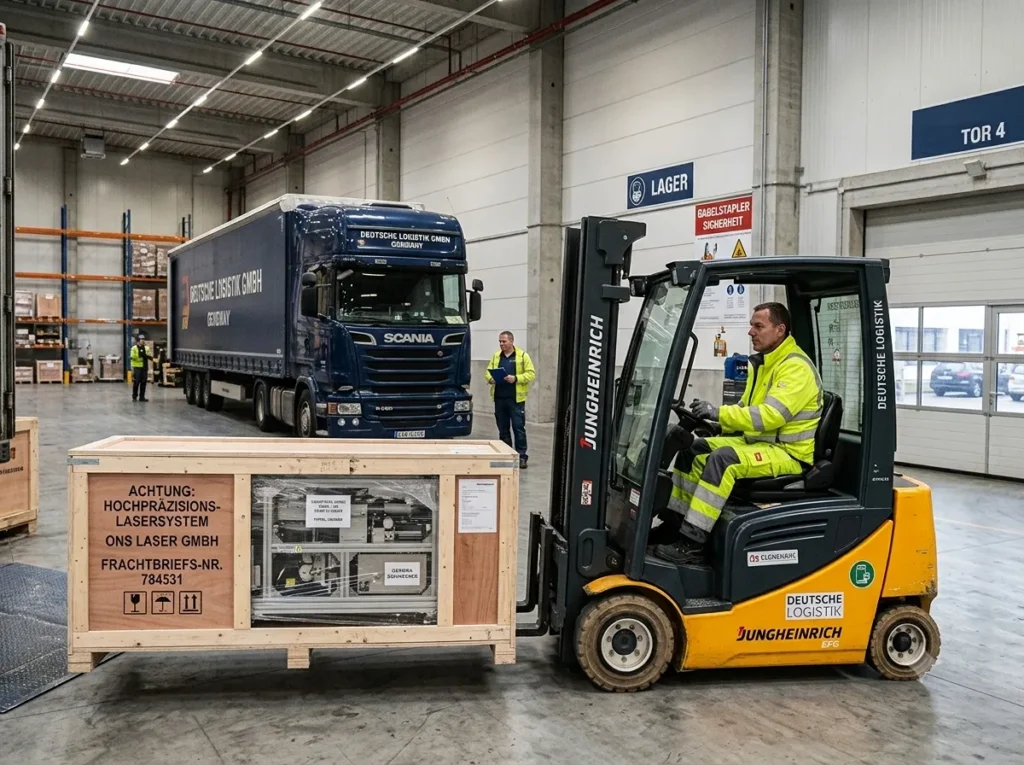
Local German Warehouse & Sample Testing
Visit our local German warehouse and showroom for live demonstrations and hands-on machine evaluation.
Complimentary cleaning tests are available using your actual workpieces or contaminant samples.
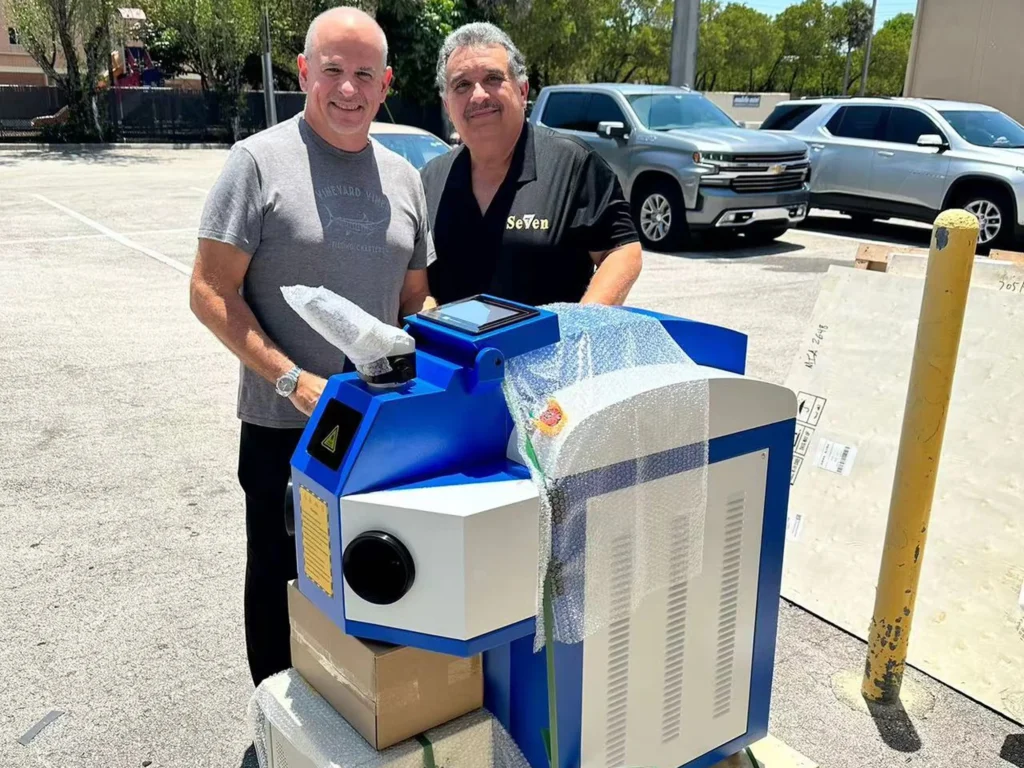
100% Pre-Assembled & Factory Calibrated
Every system is fully assembled, calibrated, and cleaning-tested before shipment. Key functions and laser performance are verified in advance, reducing on-site setup and allowing faster commissioning for your cleaning applications.
Ready to Get Your Custom Configuration & Factory Direct Price?
Click the button on the right and fill out the form. ONSLASER’s sales team will reply to you within 2 hours during business hours.
ask us
anything
Everything you need to know about Continuous Wave (CW) Laser Cleaning Machines
Q: Will a Continuous Wave (CW) laser cleaner damage my metal substrate?
A: CW laser cleaners use continuous high-power energy and are best suited to robust metal surfaces, heavy rust, thick coatings, mill scale, and large-area industrial cleaning. With appropriate power, scanning speed, and process parameters, substrate impact can be controlled. For thin, heat-sensitive, or high-precision components requiring lower heat input, a pulsed laser cleaner is generally the better choice.
Q: What is the main difference between air-cooled and water-cooled CW models?
A: The main differences are cooling capacity, power range, portability, and intended workload. Air-cooled CW models are more compact and portable, making them suitable for mobile service and light-to-medium industrial cleaning. Water-cooled CW models provide greater cooling capacity and are better suited to higher-power systems, extended operating periods, and demanding industrial workloads.
Q: How fast is a Continuous Wave (CW) laser cleaner compared with traditional cleaning methods?
A: CW laser cleaning is designed for high-throughput removal of heavy rust, paint, oxide layers, and surface contamination from large industrial components. Actual cleaning speed depends on laser power, contamination type and thickness, material, scanning parameters, and required surface condition. Compared with many abrasive or chemical processes, laser cleaning can reduce consumable use, secondary cleanup, and process preparation requirements.
Q: Is installation complex, and how easy is the machine to operate?
A: Standard CW laser cleaning systems are delivered pre-assembled, calibrated, and tested before shipment to simplify on-site commissioning. Operators mainly need to complete the required power, cooling, extraction, and safety setup for the selected configuration. We provide operating videos, parameter guidance, user manuals, and remote technical support to help operators become familiar with the system efficiently.
Q: What routine maintenance and consumable parts are required?
A: Routine maintenance requirements are relatively low. The main wear component is the protective lens (protective window) in the cleaning head, which helps protect the internal optics from dust and contamination and can be replaced when necessary. Water-cooled systems also require periodic inspection of coolant condition and level, along with routine checks of filters, optics, and ventilation components.
Q: How do you handle technical support, spare parts, and OEM/ODM customization?
A: We provide remote technical support for machine setup, parameter adjustment, troubleshooting, and routine maintenance. Common spare parts and protective optics can be supplied as needed to help minimize equipment downtime. As a direct manufacturer, we also support OEM/ODM customization, including machine colors, logo branding, interface languages, laser power configurations, and enclosure options for different applications and markets.
Get Your Factory-Direct Quote & Free Sample Test
Fill out the form below to receive detailed specs, international shipping estimates, and expert application advice within 12 hours.
Useful insights on laser Cleaning methods
Want to learn more about laser cleaning machines before investing? Explore everything you need to know about laser cleaning in this guide.
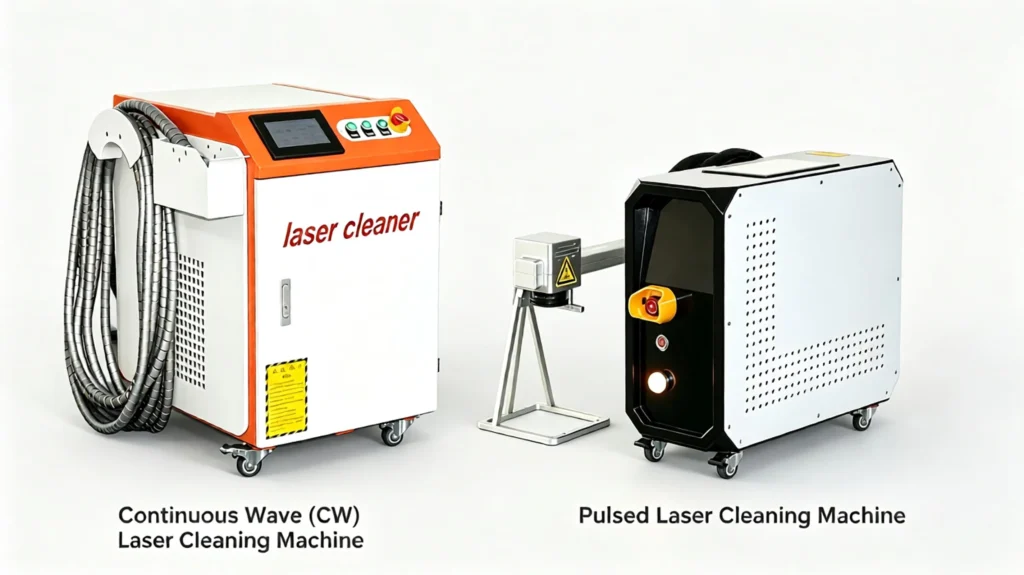
Pulse vs. Continuous Laser Cleaning: Which One is Right for Your Industry?
Continuous laser and pulsed laser are the two main types of laser cleaning machines on the market. Choosing the right machine for different application scenarios and materials will maximize its effectiveness without damaging the machine.
Does the Handheld Laser Wood Stripping Machine Really Work?
This CW fiber laser guide cuts through sandblasting waste, detailing high-throughput (15-20 m²/h) rust, epoxy, and mill scale removal on heavy steel—backed by real shipyard metrics, thermal physics, and proven ROI models.