ONSlaser delivers high-efficiency fiber, UV, and CO2 laser marking solutions engineered for demanding industrial traceability and permanent surface branding. Compliant with stringent international safety standards, our systems feature advanced high-speed galvo technology to seamlessly etch crisp QR codes, serial numbers, barcodes, and logos onto diverse substrates with zero mechanical stress or thermal damage. Achieve permanent, molecular-level high-contrast markings while drastically reducing consumable overheads and eliminating chemical inks or acid etching.
Marking Speed: High-throughput processing capable of reaching up to 7,000–12,000 mm/s with razor-sharp clarity.
Material Versatility: Anodized aluminum, steel, titanium, high-value polymers, ceramics, glass, and engineered plastics.
Control System: Intelligent galvo-scanning marking head with integrated multi-layered software for precise, multi-axis automated positioning.
Compare our three core marking technologies to find the perfect match for your application.
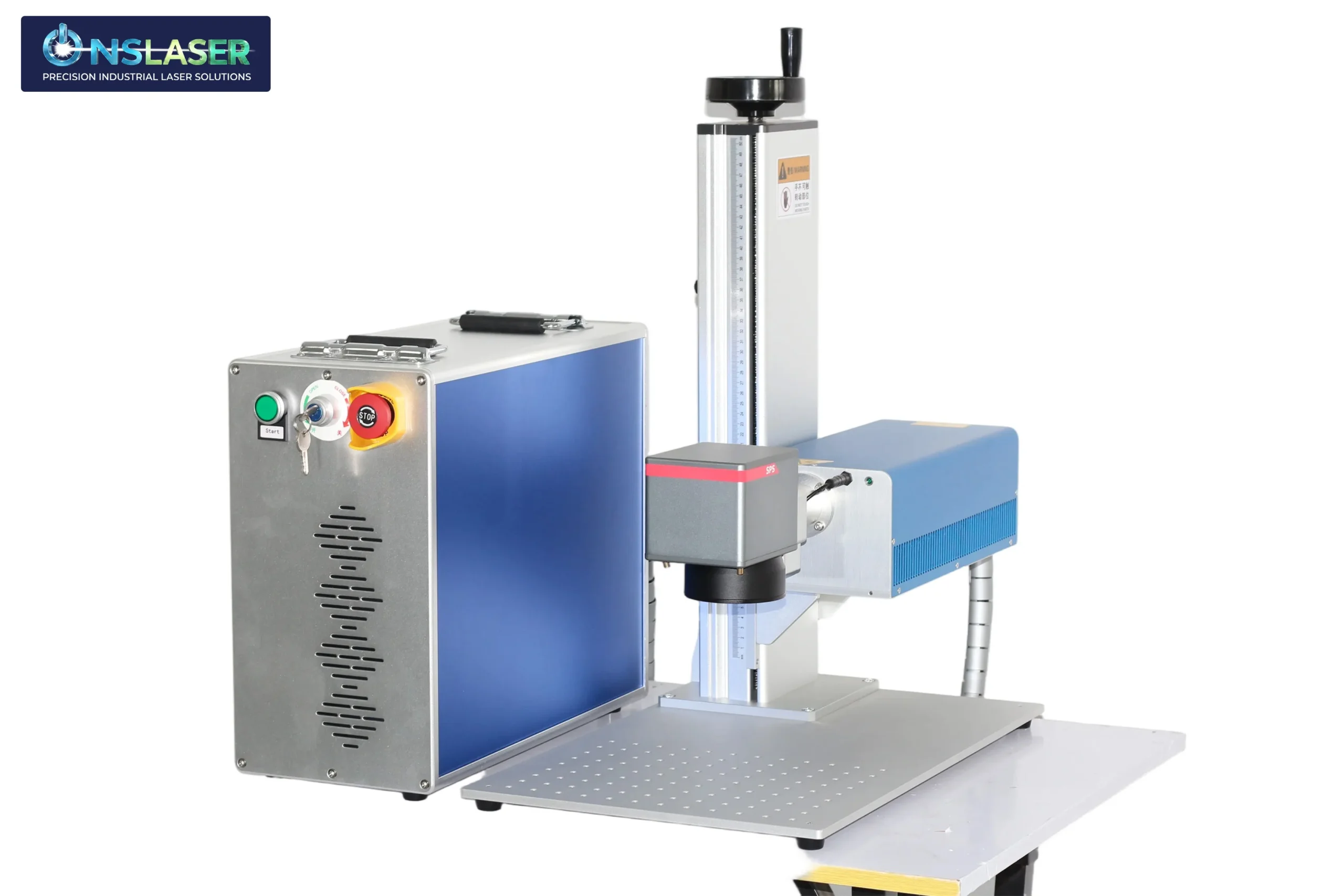
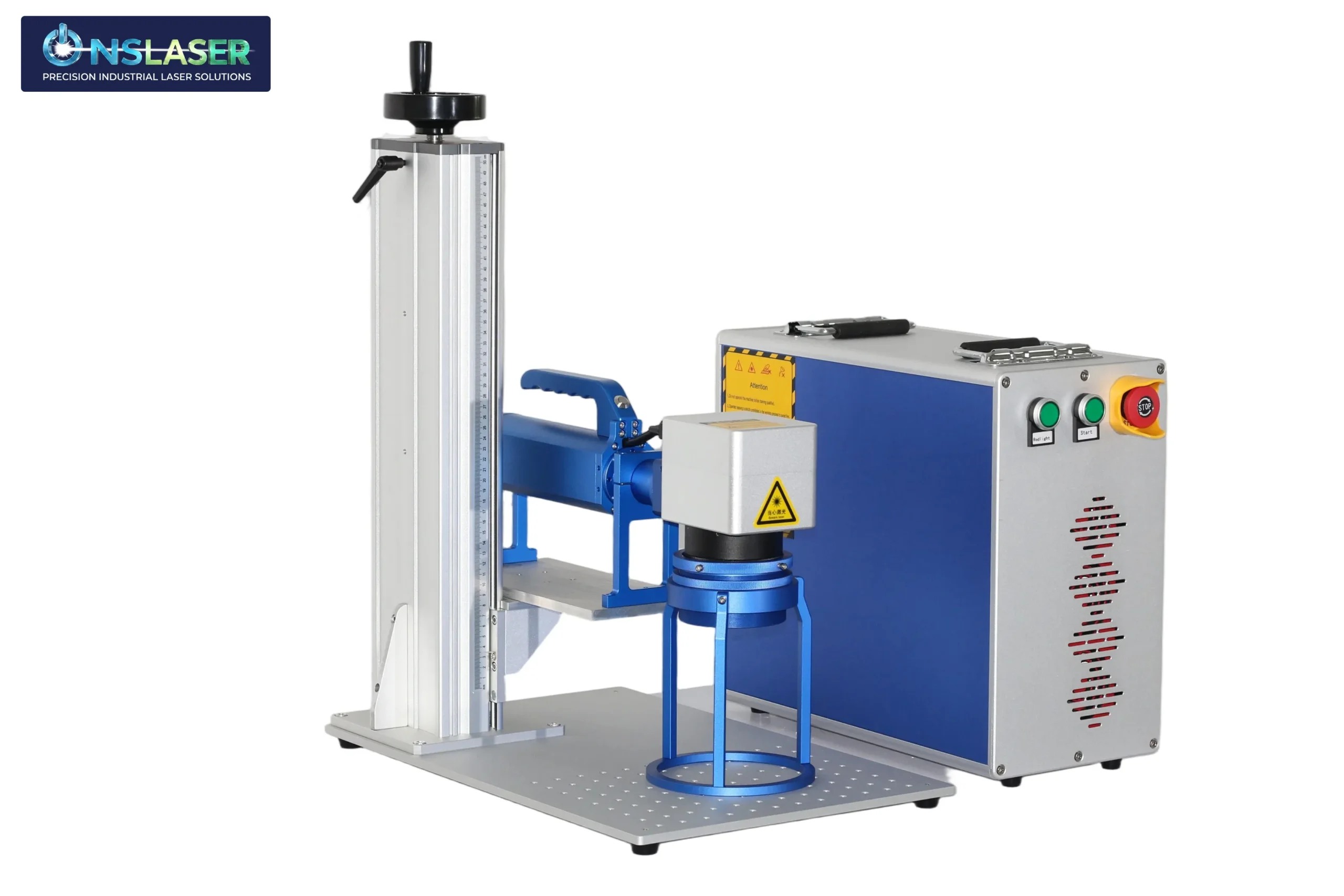
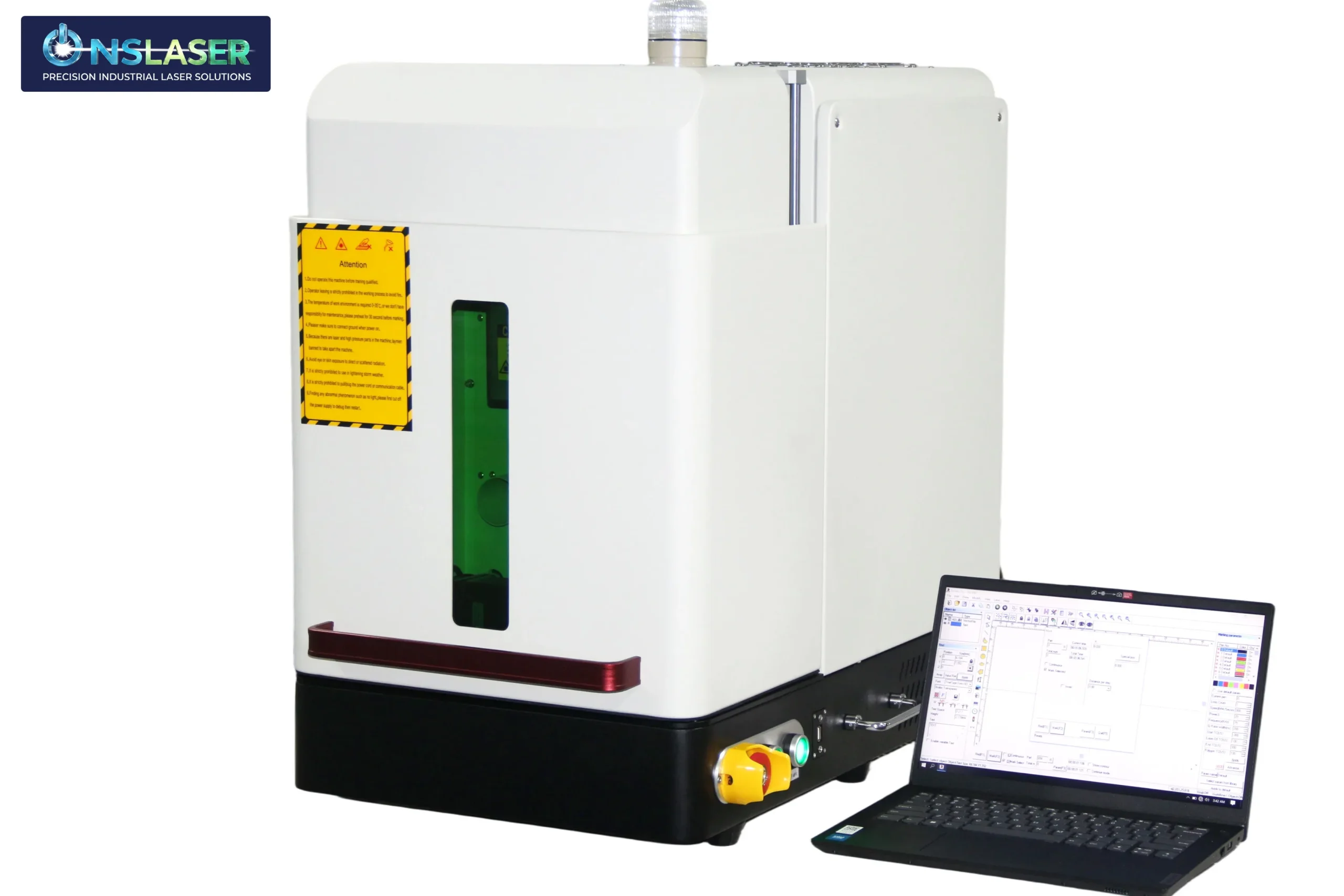
From standalone workstations to high-speed inline solutions, we customize marking systems to fit your exact workflow.
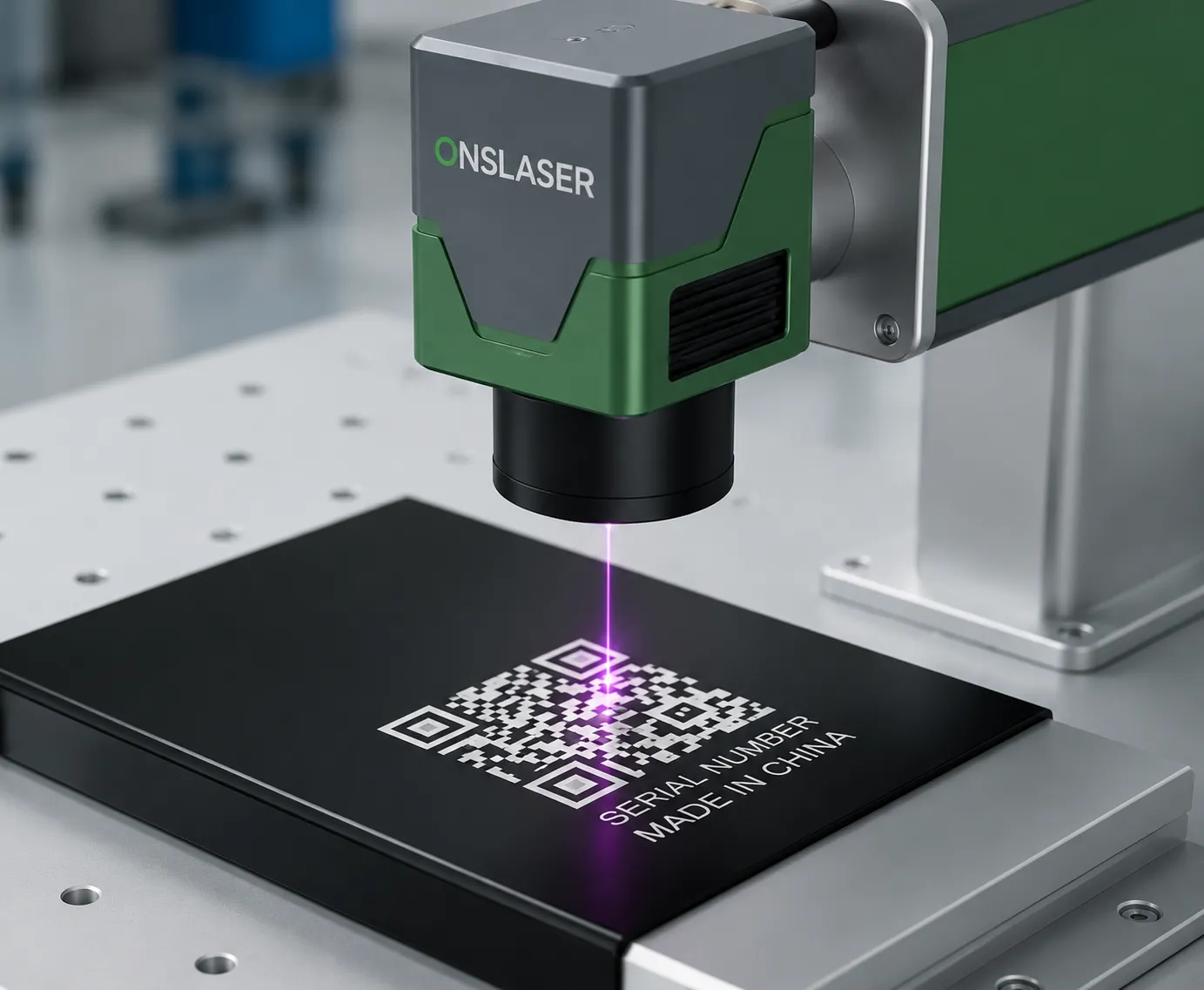
Fiber, CO2, UV, or MOPA laser sources tailored to achieve the perfect contrast on any substrate.
High-speed galvo scanners and software integration for non-stop assembly line production.
Class 1 fully enclosed safety housing, rotary chucks, or custom conveyor belts.
Custom ERP/MES software connectivity for automated serial number, QR code, and barcode generation.
The primary distinction lies in their output wavelengths, which dictate material absorption compatibility. Fiber lasers emit at 1.06 microns, delivering high peak power and making them the industry gold standard for high-speed marking on all metals and robust plastics. UV (Ultraviolet) lasers operate at a much shorter wavelength of 355 nanometers, utilizing “cold processing” where high-energy photons break molecular bonds directly without thermal degradation; this makes them mandatory for ultra-precise marking on medical plastics, glass, and high-end electronic substrates. CO₂ lasers emit at 10.6 microns, which is optimally absorbed by non-metallic organic compounds, serving as the premium choice for wood, acrylic, leather, ceramics, and packaging films.
Lifelong permanence is achieved by precisely micro-modulating the pulse duration and energy density to induce local material transformation rather than destructive burning. Depending on the substrate and parameters, the system can perform engraving (vaporizing microscopic top layers), etching (melting the surface to cause structural foaming), or annealing (inducing a localized thermal chemical change beneath the oxide layer of metals like titanium or stainless steel to alter color). Because the energy matrix is focused within microns, it leaves the surrounding bulk material structure, protective anti-corrosion properties, and dimensional integrity completely intact.
Yes. High-speed industrial laser marking systems are engineered with advanced communication architecture, natively supporting protocols such as TCP/IP, Modbus, and Profinet. This enables seamless synchronization with central PLC networks, MES systems, and industrial databases. The system’s control architecture can process intelligent dynamic data streams in real time—instantly converting variable input text into serialized alphanumeric codes, cryptographic 2D DataMatrix layouts, or high-density QR codes on the fly at moving conveyor speeds exceeding hundreds of parts per minute.
A digital galvanometer (galvo) scanning system replaces the heavy, mechanically driven XY gantry axis with ultra-lightweight, high-speed optical mirrors driven by precision servo motors. This optical architecture allows the laser beam to be deflected dynamically across the marking field with sub-micron resolution and dynamic speeds up to several meters per second. The elimination of physical mechanical friction allows for complex vector graphics, micro-text characters under 0.5mm, and high-density hatch patterns to be rendered with near-instantaneous cycle times and flawless geometric repeatability.
ONSlaser is a globally trusted manufacturer of industrial fiber laser systems. We specialize in precision laser cleaning, welding, and cutting technologies designed to optimize manufacturing output and ensure maximum operational safety for worldwide industries.
Copyright © 2026 ONSlaser. All Rights Reserved. | Privacy Policy | Terms of Service
ONSlaser Global Technical Support
Industrial Application Engineer
WhatsApp Us
Welcome to ONSlaser! Need assistance with material compatibility, technical parameters, or factory-direct pricing? Drop us a message, and our engineering team will respond shortly.
WhatsApp us