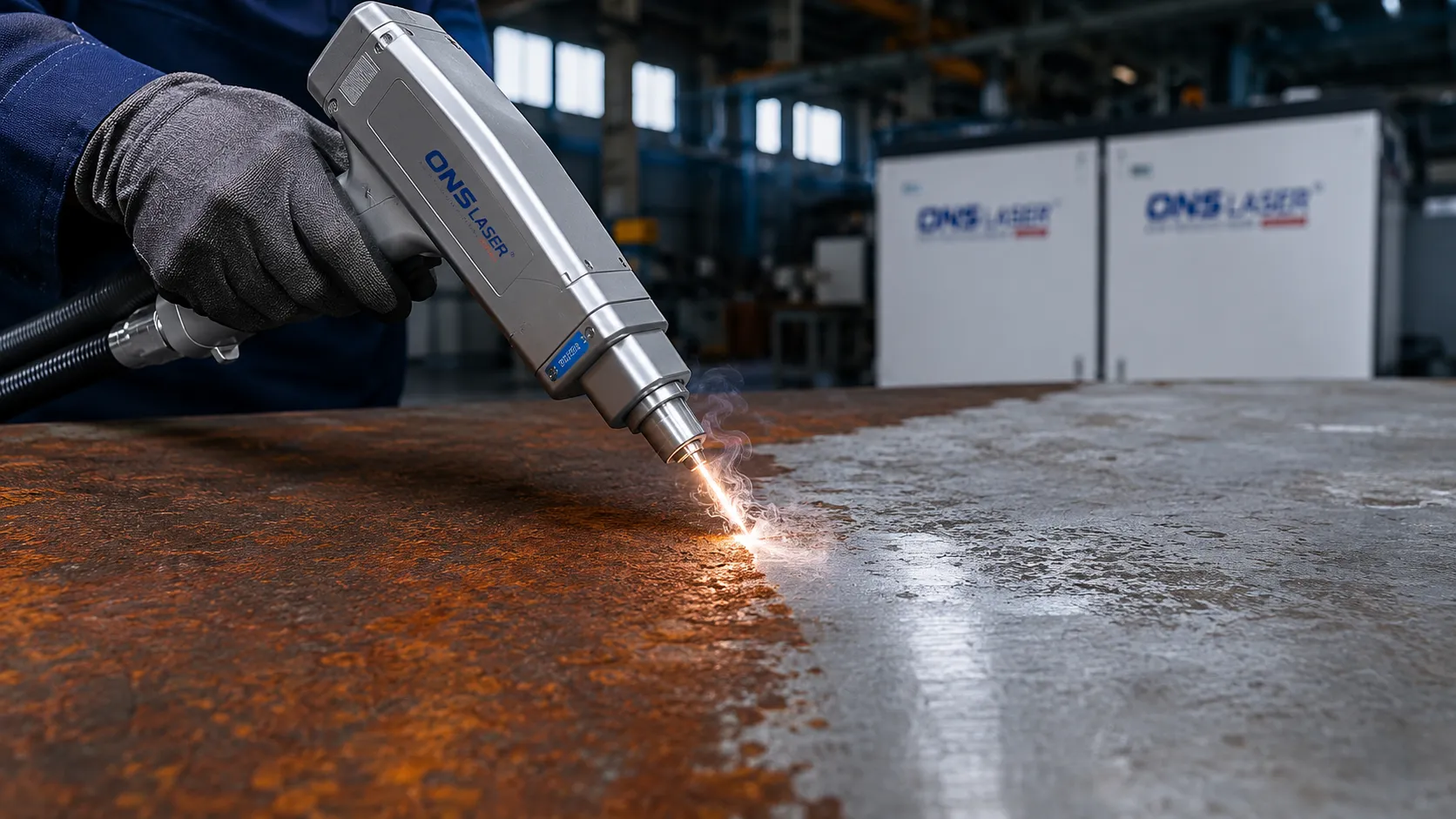
I see production lines lose parts to abrasive cleaning and regulators. I tested laser cleaning across real contaminants and matched those to the right laser technologies that work in the field.
Laser cleaning removes rust, oxides, paints, adhesives, flux, oils, and biological films without contacting the substrate when the right laser system and parameters are used.
I will show which contaminants lasers remove, explain how laser machines spare base metals, map substrates to specific technology paths, and give practical procurement guidance for manufacturers.
Introduction
I work with shop floors where repeatability, worker safety, and regulatory compliance decide purchasing. I needed a clean method that reduces consumables and downtime and meets international standards.
Laser cleaning uses focused light to ablate or delaminate unwanted surface layers. I match contaminants and substrates to technology paths to give actionable buying guidance.
I validated performance on production-grade coupons and finished parts. I measured removal rate, surface change, HAZ risk, and operator cycle time. I recorded parameter recipes for each material and contaminant combination. That makes deployment predictable and costable.
What Contaminants Can Laser Cleaning Remove?
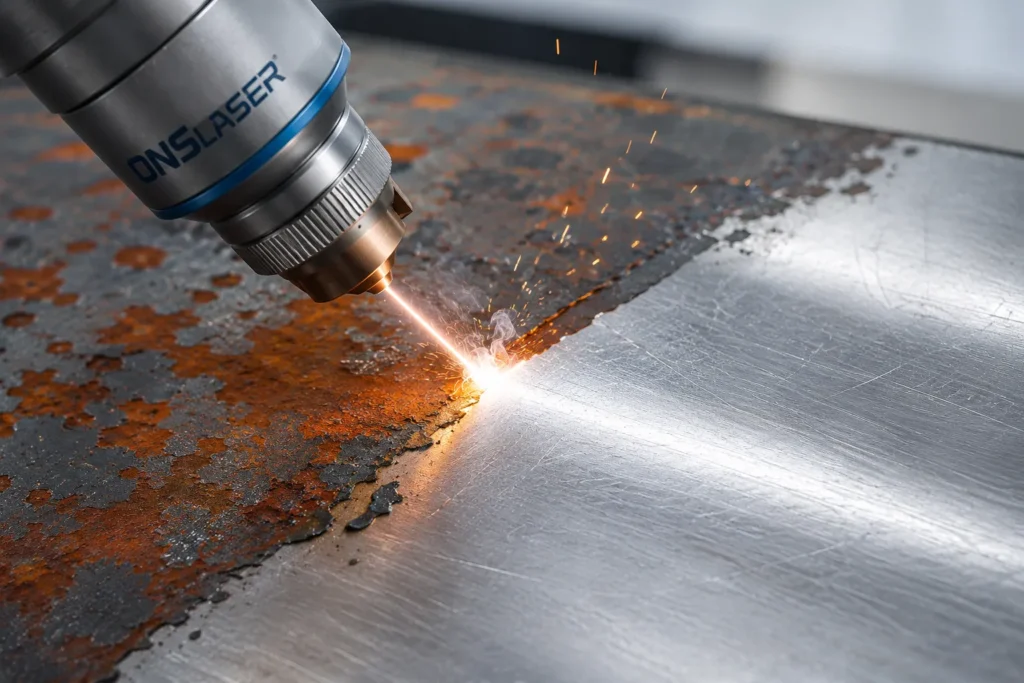
I catalogued the real contaminants I see on shop floors and paired them with the appropriate laser technology for each case.
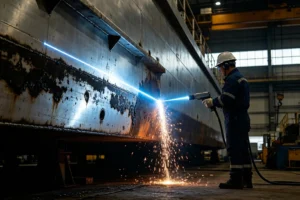
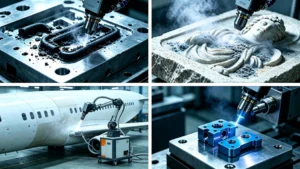
Laser cleaning effectively removes rust, mill scale, weld oxides, paint, varnish, oil and grease, adhesives, flux residues, mold release, and light polymer layers. For thick ceramic or heavy multilayer paint systems, staged approaches using CW or mechanical pre-removal may be required.
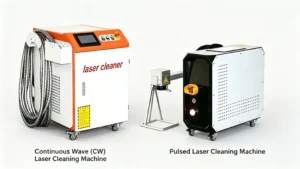
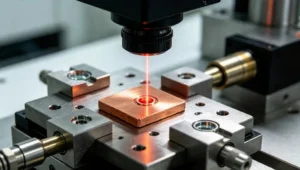
For precision cleaning like mold de-carbonization or wood paint stripping, I use precision pulsed setups. For heavy-duty industrial rust or steel plate descaling, I deploy high-power Continuous Wave (CW) laser systems. Polished copper and brass jobs benefit from tailored optics to improve absorption.
Contaminant categories, typical laser response, and technology recommendation
| Contaminant | Typical laser effect | Technology recommendation | Practical note |
|---|---|---|---|
| Oils/grease | Vaporization | Precision Pulsed Laser System | Low energy, single pass |
| Organic films/biofilms | Ablation | Precision Pulsed Laser System | Fast, low residue |
| Paints/varnish | Delamination & removal | Precision Pulsed Laser System; CW for thick layers | Test for multilayer systems |
| Adhesives/epoxy residues | Softening then ablation | Precision Pulsed Laser System with scanner | May need multiple passes |
| Rust/oxides | Oxide fragmentation | CW Laser System for heavy scale; Pulsed for spot work | CW for throughput |
| Flux/resolder residues | Ablation and soot removal | Precision Pulsed Laser System with fine optics | Good for PCB prep |
| Ceramic coatings | Partial removal, high risk | CW Laser System with staged approach | Often needs mechanical follow-up |
I always recommend a short coupon test in our lab to lock settings and confirm soot handling and residue behavior.
How Does Laser Cleaning Work Without Damaging the Base Metal?
I needed mechanisms that I could control in production. I matched these mechanisms to pulse architectures and CW operation.
Lasers remove surface layers by rapid heating (ablation), photomechanical delamination, or vaporization of contaminants. Precision pulsed systems use short bursts to limit heat diffusion. High-power CW setups use higher average power for fast bulk removal on thick parts while relying on high-speed scanners to control dwell.
I control pulse duration, repetition rate, peak power, spot size, and scan speed for every job. Factory presets give starting points. I then validate with thermal imaging on coupons to confirm temperatures stay below metallurgical thresholds.
Mechanisms and how controls manage them
| Mechanism | How it spares substrate | Control features |
|---|---|---|
| Photothermal ablation | Rapid removal with limited conduction | µs/ns modes, adjustable repetition |
| Photomechanical delamination | Stress-driven coating removal | High peak power pulses in pulsed setups |
| Vaporization | Converts contaminant to gas | Fine energy tuning and scanner speed control |
I document recipes that keep surface temperature well below tempering or annealing levels. For aluminum and thin steels, I reduce average power and increase scan speed using scanner heads.
Material Compatibility Matrix: Steel, Aluminum, and Beyond
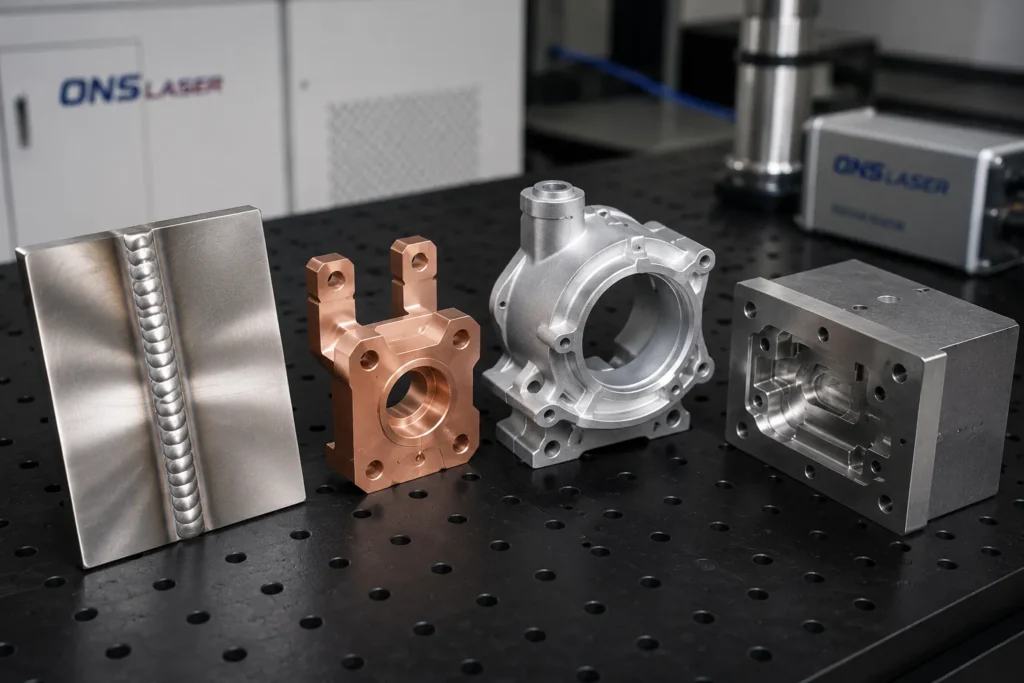
I refocused the compatibility matrix on industrial metal customers and added the procurement metrics they care about: cleaning speed, HAZ risk, and surface roughness change. I paired each substrate with a generic technology path recommendation.
| Substrate | Best Suited Laser Type | Cleaning Speed (Max) | HAZ Risk | Surface Roughness Change | Factory Recommendation |
|---|---|---|---|---|---|
| Carbon Steel | CW Laser System | Up to 15 m2/h | Low (on thick plates) | Minimal on flat stock | Ideal for fast rust removal before welding; use CW with scanner and fume capture |
| Stainless Steel | Precision Pulsed Laser System | Precision localized | Zero Risk (controlled) | Zero to negligible | Use pulsed setups with short pulses to clean weld scale without damaging passivation |
| Aluminum Alloy | Precision Pulsed Laser System | Moderate | Very Low when controlled | Negligible if using low average power | Use pulsed setups with higher scan speed; avoid CW on thin castings |
| Copper / Brass | Precision Pulsed Laser System with tailored optics | Moderate | Low with proper wavelength | Minimal with correct optics | Use optics that improve absorption and higher peak power pulses for coupling |
| Titanium | Precision Pulsed Laser System | Slow, precise | Moderate if overheated | Potential for color change | Conservative energy; start low and test coupons |
| Alloyed Tool Steel | CW or Pulsed depending on scale | Up to 12 m2/h | Low if controlled | Low if cooling is managed | CW for heavy scale; pulsed for detail cleanup |
| Composites/Coated Parts (limited) | Precision Pulsed Laser System | Low | High if misused | High risk of resin char | Test only; often prefer mechanical stripping for bulk |
I pair each recommendation with required exhaust flow rates and PPE levels. I include preset recipes for rust-to-metal and paint-to-metal transitions in factory recipe libraries.
Why Manufacturers Are Swapping Sandblasting for Laser Cleaning
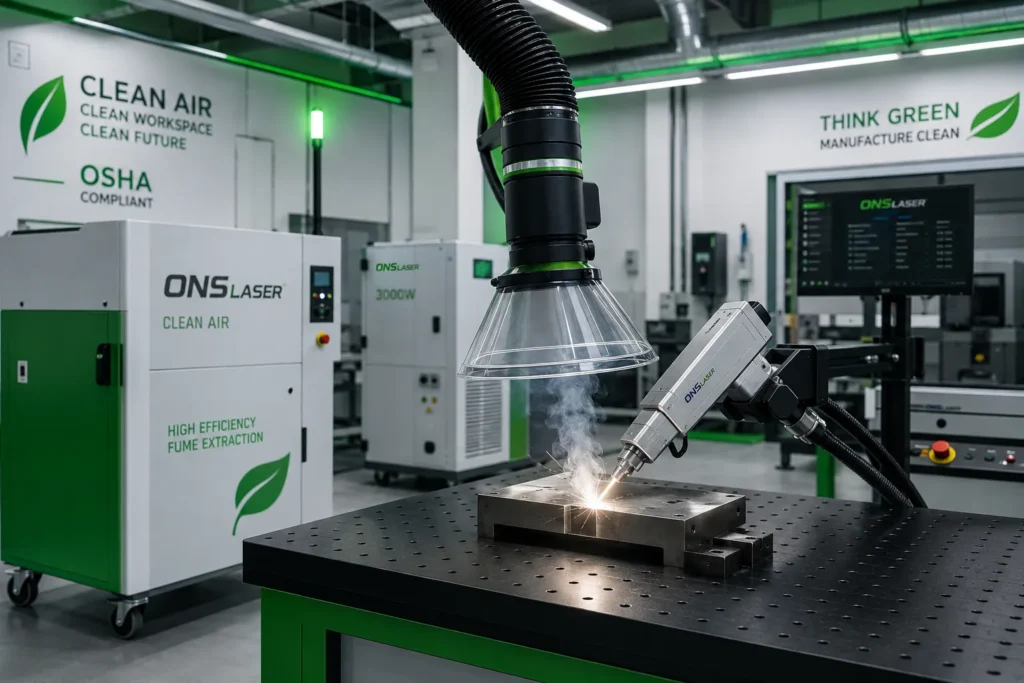
I compared sandblasting and laser cleaning using hard procurement and compliance factors that European and North American OEMs care about.
Traditional sandblasting creates secondary hazardous waste that costs thousands in disposal fees and triggers strict environmental audits. Laser systems emit no abrasive dust and avoid chemical consumables. When paired with integrated fume extraction packages, workshops can meet OSHA and EU environmental standards with lower ongoing waste costs.
I measured lifecycle costs. Abrasive blasting consumes media, generates contaminated runoff and dust, and requires PPE that increases operating expense. Laser systems have higher capital cost but far lower per-part consumables and waste disposal. Lasers also lower rework on precision parts and remove the need to mask fragile features.
Comparison table focused on compliance and TCO
| Factor | Sandblasting | Laser Cleaning |
|---|---|---|
| Upfront cost | Low–medium | High |
| Consumables | High (media) | Low |
| Waste management | Significant hazardous waste risk | Minimal; soot and condensate captured by extraction |
| Regulatory risk | High (dust, disposal, water runoff) | Lower with extraction; easier PPWR/OSHA compliance |
| Repeatability | Variable | High with presets and recipes |
| Delicate features | Risk of damage | Preserves detail with pulsed modes |
| Throughput (bulk) | High | Medium–High (with CW setups) |
| Worker exposure | High dust/noise | Laser hazards manageable with interlocks and extraction |
I recommend hybrid workflows: use abrasive blasting for gross removal on heavy structural parts, and use laser systems for finishing, precision cleaning, and regulatory-compliant workflows.
How to Choose the Right Laser Cleaning Machine for Your Production Line?
I distilled procurement into practical steps and matched them to technology choices.
Choose based on substrate mix, contaminant types, cycle time targets, automation needs, and regulatory drivers. Pulsed laser systems suit precision work. Continuous Wave (CW) laser systems suit throughput. I score vendors on onsite trials, factory presets, and spare parts availability.
I require sample runs on goal parts. Factory testing services provide recommended recipes. I prefer units with adjustable pulse energy, scanner integration, optional robotic mounts, and a packaged fume extraction and filtration solution. Service contracts and training must be part of the quote.
Buyer checklist and technology match
| Question | What to look for | Practical pointer |
|---|---|---|
| What substrates and contaminants? | Vendor recipes and coupon tests | Use factory lab free testing service |
| Required cycle time? | Peak power and scanner throughput | CW setups for high m2/h |
| Need for automation? | Robot or conveyor-ready interfaces | Look for robot interfaces and SDKs |
| Sensitive parts? | Pulsed modes, low-energy presets | Precision pulsed setups |
| Reflective metals? | Wavelength choices, optics | Tailored optics and anti-reflective strategies |
| Shop environment? | Integrated fume extraction | Include extraction in the package |
| Service & training? | Onsite support and commissioning | Factory commissioning and training included |
| Total cost of ownership? | Consumables, downtime, service | Request 24-month TCO from suppliers |
I recommend a 30–90 day pilot using vendor onsite trials. Track KPIs: throughput, first-pass yield, rework, filter replacement, and disposal cost. Use those numbers to validate ROI.
Conclusion & CTA
I tested laser systems across contaminants and substrates and found predictable, industrial-ready recipes that reduce waste and regulatory risk.
📬 Get Your Custom Material Testing Report & ROI Estimate
At ONSlaser, we don’t just sell machines—we engineer cleaning solutions for your production line.
How to get started?
- Fill out the Right-Side Inquiry Form with your substrate metal and contaminant type.
- Send us your sample parts (Free Sample Testing in our application lab).
- Receive a comprehensive parameter recipe report and a detailed cost-per-part ROI calculation within 48 hours.
Click “Get A Laser Quote” or fill the form on the right to talk to our technical sales engineers today!