Choose the wrong laser source and you’ll see it on the shop floor within hours: sooty edges on acrylic, warped stainless tags, unreadable DPM codes, clogged optics, and a takt time that keeps slipping. Same part, same fixture—switch the wavelength and the outcome changes completely. This guide is the no-spin comparison engineers use to lock in consistent quality, stable cycle times, and a lower cost per part.
1. Introduction: The Wavelength Dilemma in Industrial Laser Processing
Why Choosing the Wrong Laser Source Costs You Time and Money
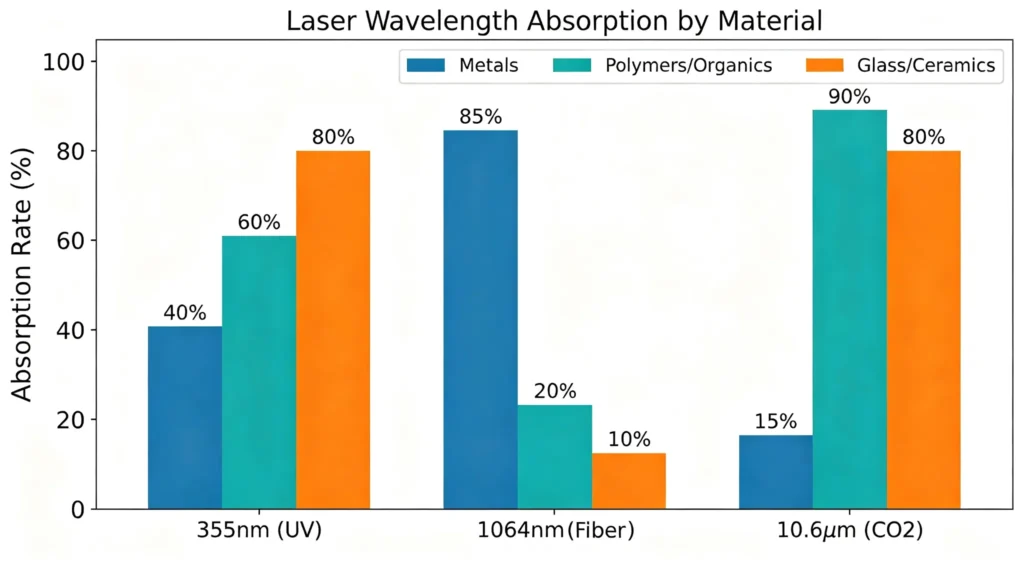
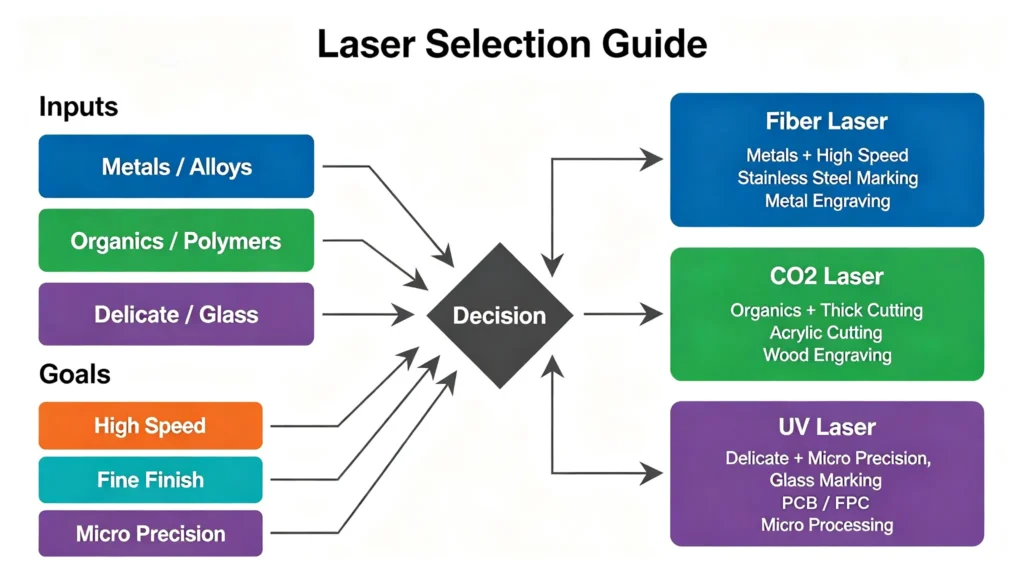
Absorption is everything. Metals couple strongly to 1064 nm (near-IR). Organics soak up 10.6 µm (far-IR). UV at 355 nm drives photochemical ablation with minimal heat diffusion. Force the wrong match and you pay for it in:
Low coupling: Power goes into heat, not process—slow, inconsistent depth.
Charring and melt: Plastics brown, wood scorches, acrylic drags and hazes.
HAZ and warp: Thin metals distort; brittle glass micro-cracks.
Production drag: Frequent parameter babysitting, lens cleaning, and rework.
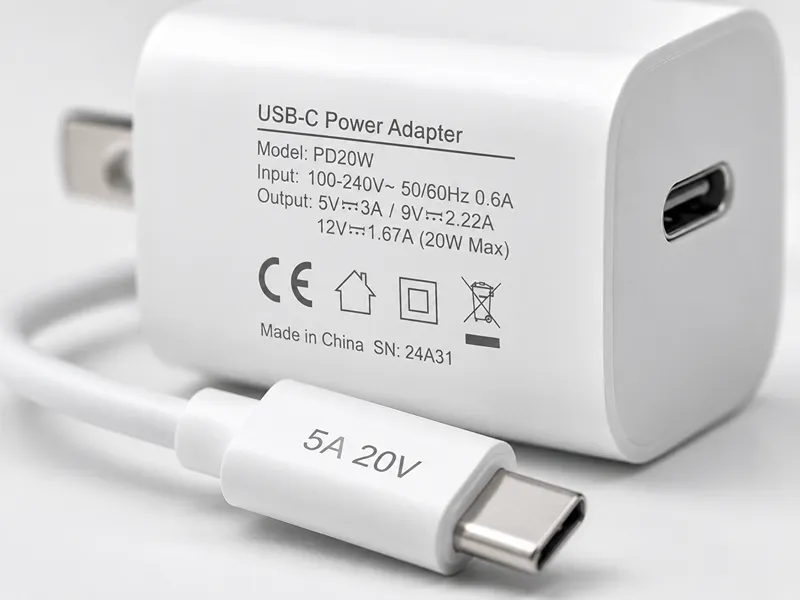
Best for: Metal marking, thin-sheet cutting, local welding, anodized layer removal, deep engraving, UID/2D codes.
Real-world notes:
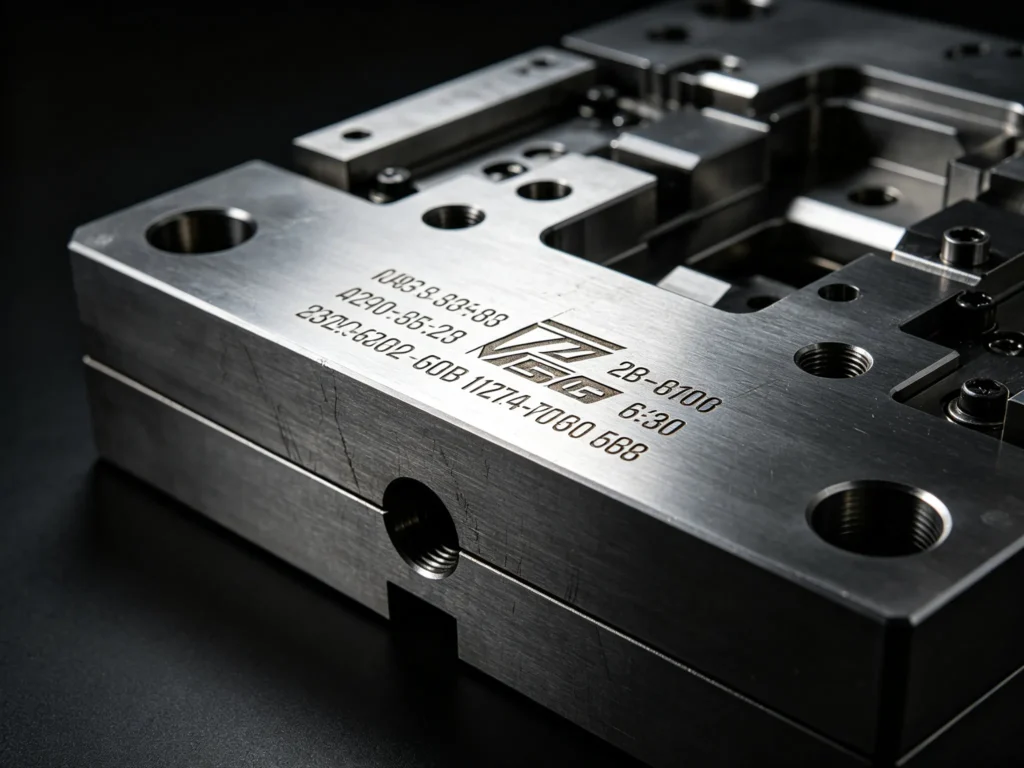
Steel/stainless/titanium: High absorption, fast, crisp edges. MOPA pulse shaping achieves deep black marks on stainless with minimal HAZ.
Aluminum/copper: Manage high reflectivity using MOPA/short pulses, high peak power, and anti-back-reflection optics. Great for coating/oxide removal; thick cutting requires higher power and optics care.
Setup tips:
Short pulses + high scan speeds to cap thermal load.
Use air knife + strong extraction to avoid redeposit.
Enable back-reflection protection when working on high-reflective alloys.
CO₂ Lasers (10.6 µm): The Non-Metal & Organic Material Standard
Core: Gas discharge laser at 10.6 µm, strong absorption in organics (C–H, O–H bonds).
Acrylic: “Polished” glossy edges with right speed/power; thicker sheets run slower with strong extraction to prevent haze.
Paper/leather/rubber: Clean kerfs; minimize browning using air assist and tuned speed.
Setup tips:
Metals largely reflect 10.6 µm—use CO₂ to process organics or strip organic coatings from metals.
Keep mirrors/windows clean; fume extraction is mandatory to avoid lens burn-in.
UV Cold Lasers (355 nm): Micro-Precision with Zero Thermal Distortion
Core: Third-harmonic solid-state; short wavelength + high peak power. Dominant photochemical ablation with minimal thermal diffusion.
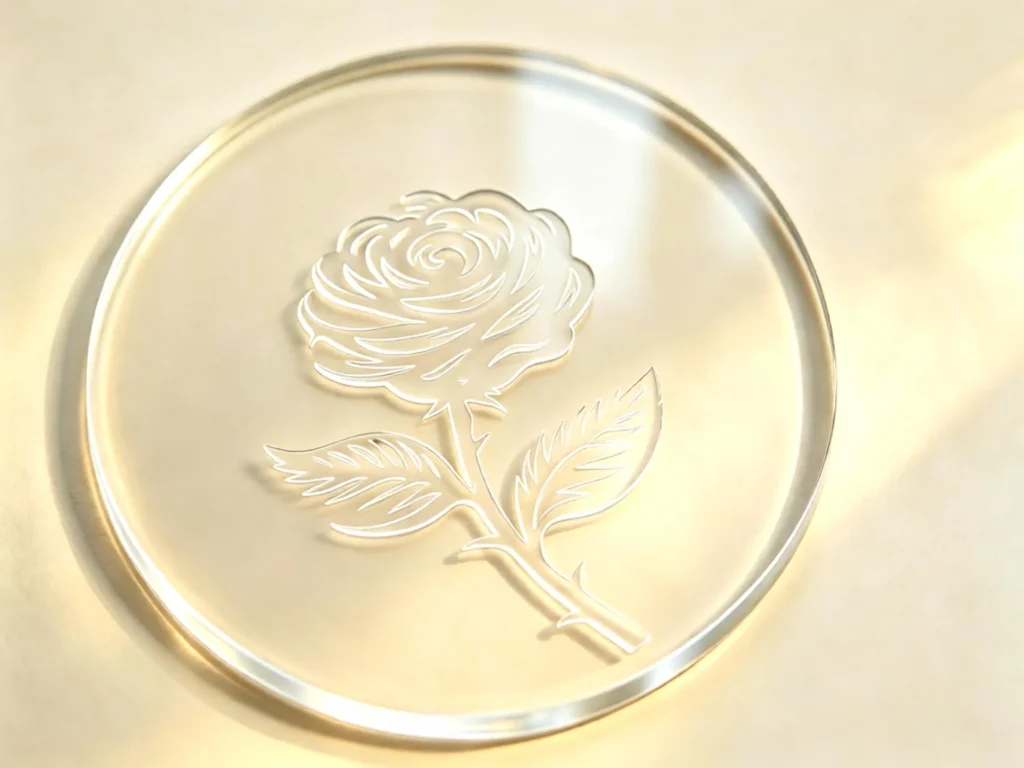
Best for: FPC/PCB solder mask opening, cosmetic polymer marking (no yellowing), glass/sapphire micro-features, thin-film/coating removal without base damage.
Real-world notes:
PC/ABS/PA/PEEK: High-contrast white/frost marks without melt or halo—ideal for cosmetic and medical parts.
Glass/ITO/sapphire: Tight kerf, low micro-cracks—sensors, optics, and displays benefit.
Setup tips:
Environmental stability matters: clean dry air purge, stable temperature.
Use high-precision stages or vision for micro features and tight tolerances.
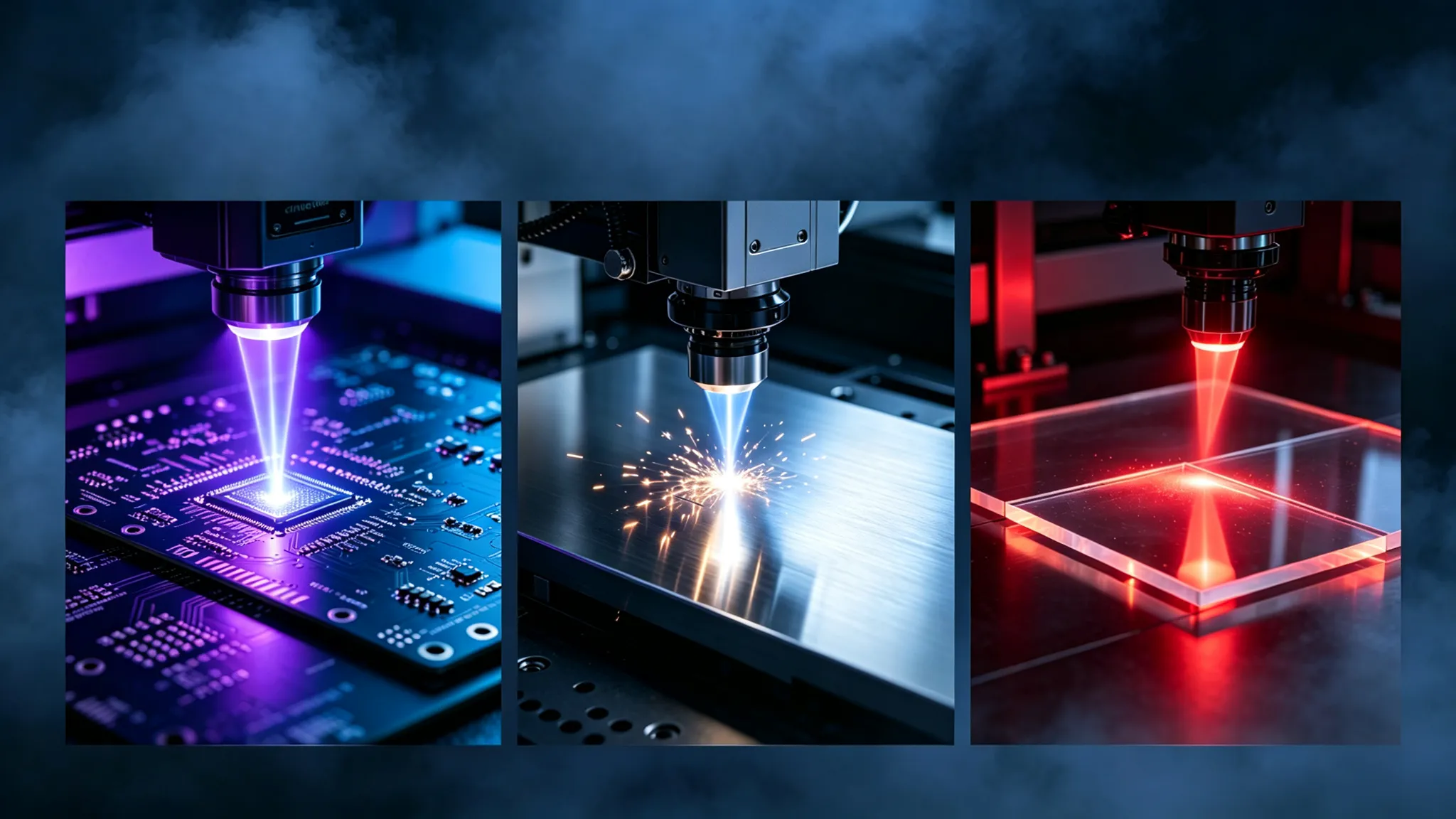
Fiber laser marking
CO₂ laser marking
UV laser marking
3. Material Compatibility Battle: Which Laser Fits Your Substrate?
Metals & Conductive Alloys
Fiber (1064 nm): First choice. Fast, clean marks on steel, stainless, nickel alloys, titanium. Works on Al/Cu with MOPA and anti-back-reflection protection. Ideal for coatings/oxide removal and serialization.
CO2 (10.6 µm): Inefficient on bare metals; use only for organic coating removal on metal parts.
UV (355 nm): Excellent for micro-texture, thin-film/anodized layer patterning, and precision marks; not economical for thick metal cutting or welding.
Organics & Non-Metals
CO₂ (10.6 µm): Go-to for wood, leather, paper, rubber, acrylic; smooth edges and high throughput.
Fiber (1064 nm): Can mark some plastics via foaming/color-change; risk of yellowing or melt—application dependent.
UV (355 nm): Premium choice for plastics/films where contrast and zero charring are critical (medical, consumer electronics).
Heat-Sensitive & Delicate Substrates
UV (355 nm): Top pick for glass, sapphire, FPC, thin films, coated optics—smallest HAZ and best edge quality.
CO₂ (10.6 µm): Works on textiles/paper with tuned parameters; manage browning with air assist and speed control.
Fiber (1064 nm): Limit to coatings or very shallow surface work on sensitive materials.
UV: Optics and frequency conversion need care; environment sensitive. Savings come from higher yield and no secondary finishing.
Quick Spec/Use Comparison
Factor
Fiber (1064 nm)
CO₂ (10.6 µm)
UV (355 nm)
Best on
Metals
Organics/non-metals
Heat-sensitive, micro-features
Typical use
Metal marking, thin cutting, weld/ablation
Acrylic/wood cutting, engraving
PCB/FPC, glass, cosmetic plastic
HAZ
Medium (metals)
Low on organics; browning risk
Minimal
Speed
Fast on metals
Fast on organics
Moderate/slow, highest precision
Maintenance
Low
Medium-high (optics/tube)
Medium (env. sensitive)
Automation fit
Excellent
Mature
Precision cells/vision-centric
5. Total Cost of Ownership (TCO): Initial Investment vs. Long-Term ROI
Capex vs. Opex: Understanding the Real Cost per Part
Cost per part = Energy + Consumables + Depreciation + Labor + Scrap + Secondary finishing + Planned/unplanned downtime.
TCO Driver
Fiber
CO₂
UV
Capex
Medium
Low–Medium
High
Energy use
Low
Medium
Low–Medium
Consumables
Minimal
Optics/tube, filters
Optics care, clean purge
Rework/finishing
Low on metals
Low on acrylic; variable on others
Minimal, cosmetic safe
Best ROI when
Metal-heavy 24/7 lines
Non-metal cutting shops
Precision/medical/electronics
Rules of thumb:
Fiber: Lowest cost/mark for metal serialization and thin-sheet features with stable three-shift uptime.
CO₂: Cost leader for acrylic and organic cutting if fume/optics maintenance is disciplined.
UV: Higher Capex, but end-to-end savings where scrap, polishing, or post-processing erodes margins.
6. Selection Decision Matrix: Which One Should You Buy?
Choose Fiber Laser If…
Your primary workload is steel, stainless, titanium, nickel alloys, anodized/plated components.
You need fast metal marking, coating/oxide removal, thin-sheet precision, or localized welding.
You want low energy use, minimal maintenance, and robust 24/7 automation integration.
Choose CO₂ Laser If…
You process wood, leather, paperboard, rubber, acrylic, or need glass/ceramic surface marks.
You want large-format cutting/engraving with predictable throughput and smooth edges.
You prefer lower initial cost and can maintain optics and fume extraction.
Choose UV Laser If…
You handle heat-sensitive or brittle substrates: PCB/FPC, cosmetic plastics, glass, sapphire, thin films.
You need high-contrast marks without yellowing, charring, or melt.
Yield, cosmetic perfection, and zero secondary finishing matter more than raw speed.
7. Why Partner with ONSLASER for Your Triple-Source Selection?
Unbiased Multi-Source Engineering Advice
Full in-house spectrum: Fiber, MOPA, CO₂, UV, and YAG. We match technology to your substrate and takt—no single-source bias.
German Warehouse Availability & Fast European Delivery
Duty-paid stock and a local showroom in Germany for live demos and on-the-spot sample testing; rapid spares and shorter lead times across Europe.
100% Pre-Calibrated Plug-and-Play Systems
Fully assembled, optically calibrated, and application-validated before dispatch. Up and running in under 10 minutes right out of the crate.
Direct Factory Pricing & OEM/ODM
No middleman markups. Hardware/software customization, fixtures, vision systems, conveyors, MES integration, anti-reflection packages—engineered to your line.
Why Partner with ONS LASER for Your Next Project?
Bring us your parts, target takt, and quality requirements. We’ll validate the right wavelength with real samples, deliver a parameter set, cycle-time estimate, yield projection, and a TCO snapshot. With duty-paid EU stock, a German showroom for hands-on trials, and factory-direct pricing, you get performance without the guesswork.
Ready to Verify Your Materials Before Buying?
Don’t guess on capital equipment. Send your exact parts to our application lab for a 100% free feasibility test with microscope photos and HD video proof. Contact ONSLASER Application Engineers for Free Testing & Quote.
Welcome to ONSlaser! Need assistance with material compatibility, technical parameters, or factory-direct pricing? Drop us a message, and our engineering team will respond shortly.
WhatsApp us
Get Your Free Project Quote & Solution
Fill out the form below, and our technical team will be in touch within 24 hours.